

Allowing coral reef fish populations to recover could dramatically increase sustainable fish yields and help feed millions of people worldwide, according to a new study published in PNAS by scientists at the Smithsonian Tropical Research Institute (STRI) in Panama and collaborators from several institutions.
The research shows that many reef fish populations are depleted and producing far below their sustainable potential. Rebuilding these stocks could raise global fish yields by nearly 50%, providing between 20,000 and 162 million additional servings annually – enough to meet recommended seafood intake for several million people.
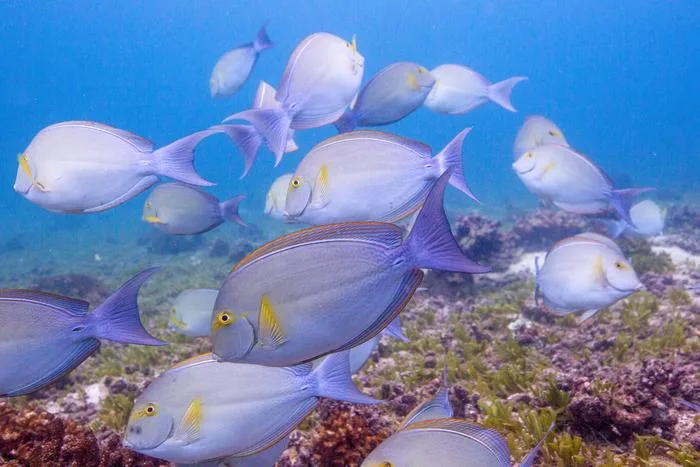
“Our study quantifies how much is being lost by having overfished reef fish communities in terms of food provisioning and, in turn, how much could be gained from rebuilding reef fish stocks and managing them at sustainable levels,” said Jessica Zamborain-Mason, professor at King Abdullah University of Science and Technology (KAUST) and lead author.
The greatest benefits would occur in regions with high hunger and micronutrient deficiencies, particularly parts of Africa and Southeast Asia. Indonesia was identified as having the largest potential gain. “There is a positive correlation between countries’ potential increase in the number of fish servings with stock recovery and their global hunger index,” said STRI staff scientist and co-author Sean Connolly.
Researchers analyzed global coral reef data from countries including the Dominican Republic, Panama, Jamaica, Kenya, Mauritius, Oman, Madagascar, the Philippines and Indonesia. Using statistical models, they estimated current yields and projected recovery under different management scenarios. Recovery times ranged from six to 50 years depending on depletion levels and fishing restrictions.
The study emphasizes that rebuilding reef fisheries is not only an ecological goal but also a pathway to improve nutrition and fight hunger. Achieving these gains would require effective fisheries management, alternative livelihoods during recovery periods, and international support.
“Our findings reinforce that effective reef fisheries monitoring and management has substantial and measurable benefits beyond environmental conservation; it has food security and public health implications,” Zamborain-Mason said.





Comments
Comments are closed.