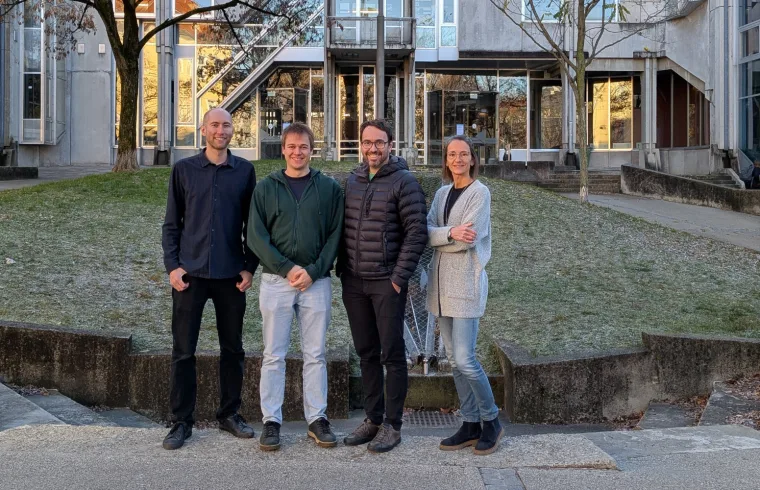
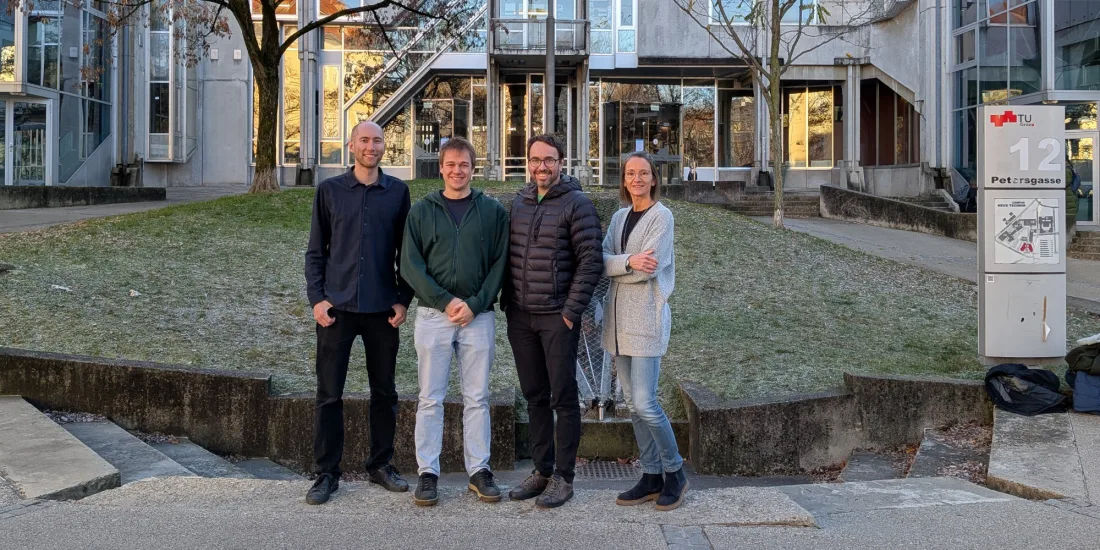
GRAZ, Austria, Jan 22 – Scientists at TU Graz and the University of Graz have developed an artificial intelligence method that they say could transform the design of enzymes, making them faster, more stable and more versatile than current artificial biocatalysts.
The study, published in Nature, introduces a technology called Riff-Diff (Rotamer Inverted Fragment Finder–Diffusion), which allows protein structures to be built directly around active sites rather than relying on existing databases. Researchers said the resulting enzymes showed higher activity and stability, with some remaining folded at temperatures above 90 degrees Celsius.
“Instead of searching databases for structures that fit, we can now design enzymes from scratch in a one-shot process,” said Gustav Oberdorfer of TU Graz, whose ERC project HELIXMOLD laid the groundwork for the breakthrough.
From 35 tested sequences, the team produced active enzymes for different reaction types, which they said were significantly faster than earlier computer-assisted designs. The method combines generative machine learning models with atomistic modeling to achieve angstrom-level precision.
The researchers said the advance could accelerate industrial processes, enable targeted enzyme therapies and support environmental applications such as breaking down pollutants.
“This is a shortcut to evolution,” said co-author Adrian Tripp of TU Graz. “Nature takes time to produce enzymes, but our approach speeds up the process dramatically.”
The project was carried out in collaboration with the University of Graz. Mélanie Hall of the university’s Institute of Chemistry said the work highlighted the importance of interdisciplinary approaches in modern biocatalysis.