
SAN FRANCISCO – The way parents use and manage screens at home may influence how teenagers play video games over time, according to a new study published in the World Journal of Pediatrics.
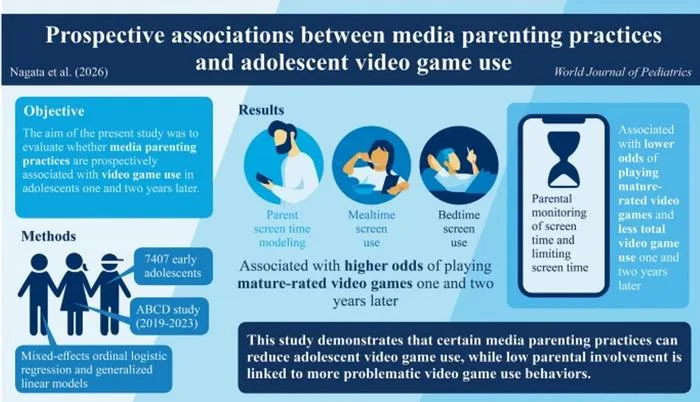
Researchers from the University of California and international collaborators tracked more than 7,400 adolescents in the Adolescent Brain Cognitive Development Study. They found that parental screen use during meals and in bedrooms was linked to greater gaming overall and higher odds of playing mature-rated titles one to two years later. By contrast, parental monitoring and clear screen-time limits were associated with less gaming and lower exposure to mature-rated content.
The study, reported on Jan. 8 (DOI: 10.1007/s12519-025-01009-y), analyzed data from adolescents aged 11 to 16. Parents completed a 14-item questionnaire covering six domains of media parenting, including screen-time modeling, mealtime use, bedroom use, behavior control, monitoring, and limits. Researchers then examined whether these practices predicted later gaming patterns, adjusting for demographics and baseline gaming.
Findings showed that permissive screen environments – such as frequent parental screen use around children – were linked to more problematic gaming symptoms and longer weekend play. Monitoring and consistent limits appeared protective, though effect sizes were modest and varied by sex.
The authors cautioned that the study does not prove causality but said the results highlight family media habits as a practical target for reducing risky gaming behaviors. They suggested that reducing screen use at meals and in bedrooms, avoiding screens as behavioral rewards, and setting clear limits may help curb excessive play.
Video games are now nearly universal among adolescents, and concerns have grown about problematic use and exposure to mature-rated content. Previous research has often relied on cross-sectional data, making it difficult to assess long-term effects. This study provides longitudinal evidence that parenting practices may shape gaming trajectories.