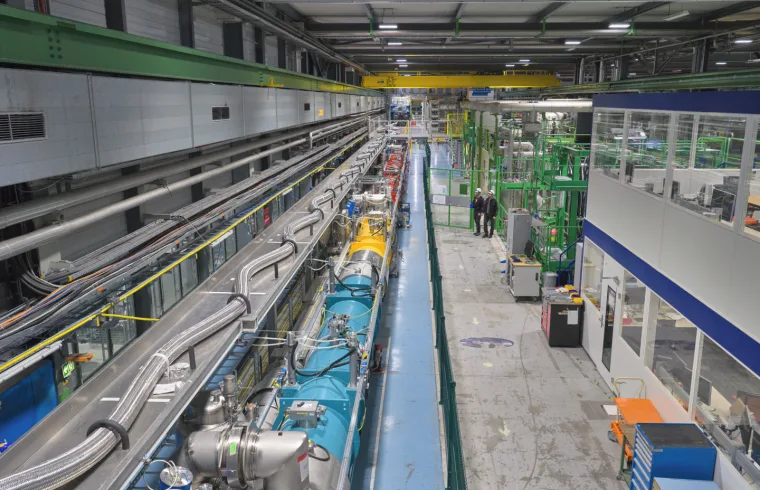
Scientists at CERN have triggered the complex cooldown of a 95-m-long test stand that reproduces the underground configuration of innovative technologies for the Large Hadron Collider’s high-luminosity upgrade
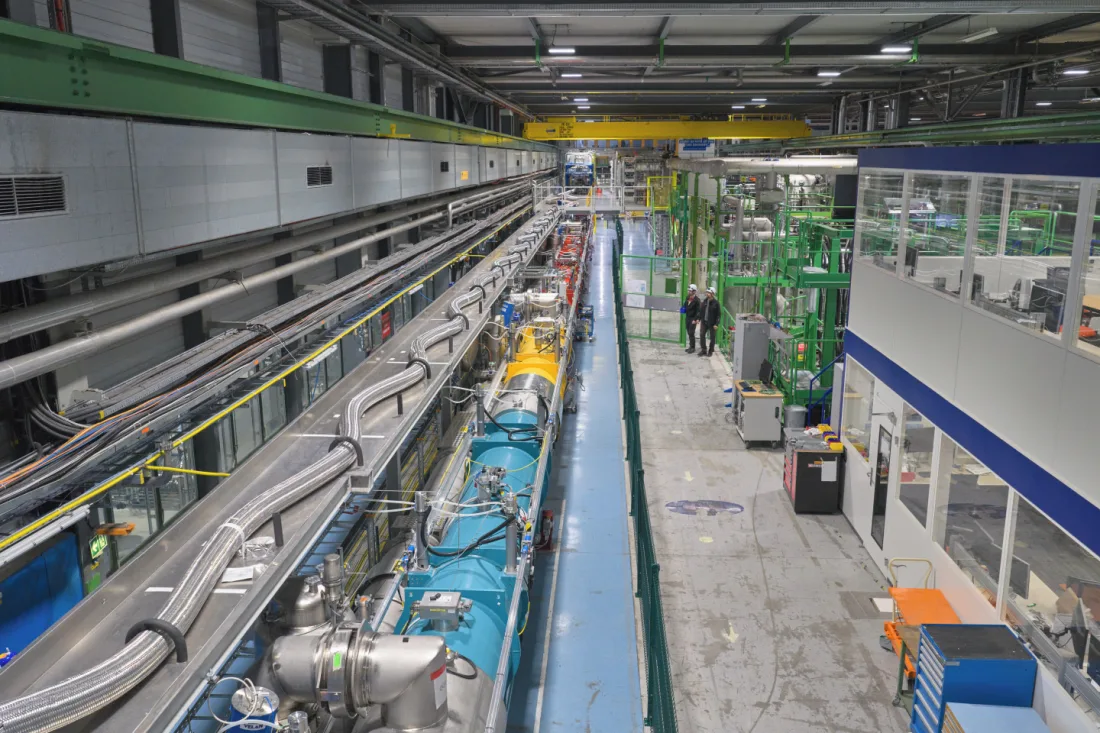
GENEVA, Feb 23 – CERN has begun cooling a full-scale test stand for the High-Luminosity Large Hadron Collider (HiLumi LHC) to 1.9 Kelvin (‑271.3 °C), marking a key milestone in its flagship upgrade project.
The 95-metre-long “Inner Triplet String” replicates the new magnet system and infrastructure that will be installed in the collider during a four-year shutdown starting this summer. The HiLumi LHC, due to start operations in 2030, is designed to increase collision rates tenfold, enabling physicists to probe the Higgs boson and other particles with unprecedented precision.
“This is the largest project undertaken by CERN in the past 20 years,” Director-General Mark Thomson said. “It will allow us to understand how the Higgs boson interacts with itself – a measurement that could shed light on the origins and fate of the Universe.”
The upgrade introduces technologies never before used in a proton accelerator, including superconducting crab cavities, crystal collimators and high-temperature superconducting transfer lines. Central to the project are new niobium–tin magnets, capable of generating stronger fields than the collider’s current niobium–titanium magnets.
“All systems have been tested individually. The IT String validates their integration under operational conditions,” said Oliver Brüning, CERN’s Director for Accelerators and Technology.
The HiLumi LHC project involves nearly 50 institutes across more than 20 countries, with contributions from CERN member states and partners including the United States, Japan, Canada and China. The cooldown process, using liquid helium refrigeration, is expected to take several weeks.