Kathmandu, Feb 12 – Air quality in Nepal’s Kathmandu Valley showed a brief improvement in December but quickly deteriorated again in January, according to monitoring data from the International Centre for Integrated Mountain Development (ICIMOD).
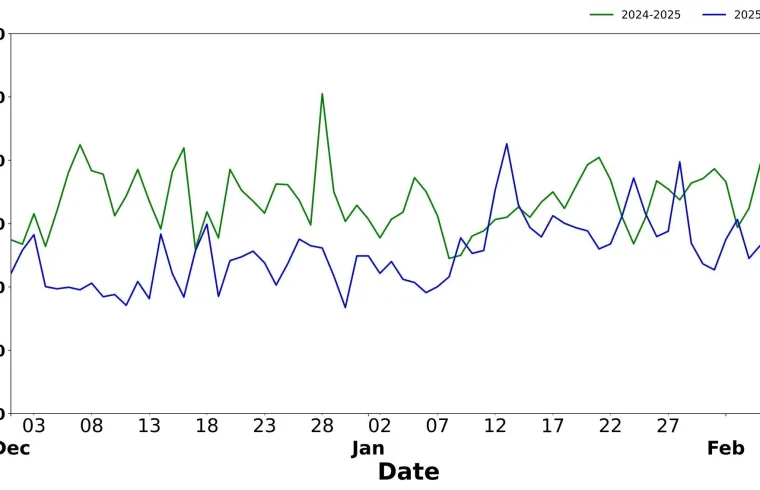
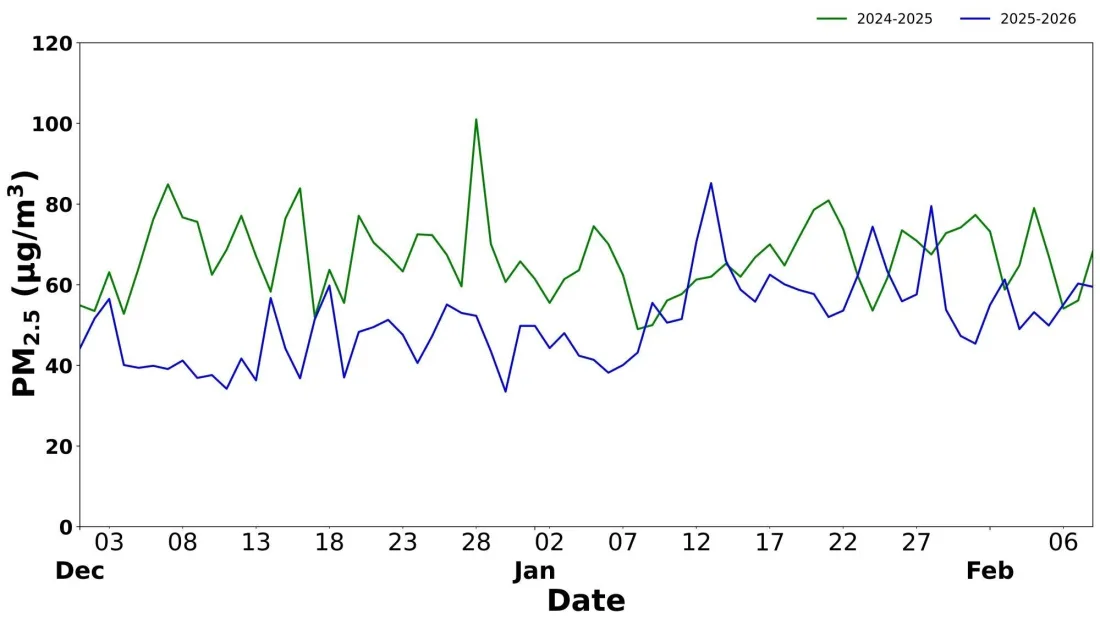
ICIMOD’s Khumaltar station recorded an average of 45 micrograms per cubic metre (µg/m³) of fine particulate matter (PM2.5) in December 2025, compared with levels nearly 1.5 times higher a year earlier. Between December 2025 and February 2026, mean PM2.5 levels stood at around 50 µg/m³, still above the World Health Organization’s “unhealthy” threshold.
Pollution rebounded in January, with concentrations rising to a maximum of 85 µg/m³, slightly higher than the same period in 2025. “December 2025 was noticeably cleaner than December 2024. But since January, pollution has started rising again,” said ICIMOD air pollution analyst Suresh Pokhrel. “This pattern shows we are not dealing with any lasting change, but only a brief relief.”
Experts said winter weather conditions, including colder air and slower circulation, worsen exposure to pollution. But ICIMOD’s energy specialist Abhishek Upadhyay noted emissions were the main driver. “December’s cleaner air was most likely linked to reduced emissions rather than meteorology,” he said. “The rebound in January and February shows how quickly pollution returns when emissions are high.”
Ashish Tiwari, ICIMOD’s lead on air quality, warned that temporary dips should not be mistaken for progress. “Without targeted and sustained emission cuts, severe pollution events will keep coming back every year,” he said. “Temporary dips are not progress, sustained changes are.”
Nepal’s government has launched the National Air Quality Management Plan (NAQMAP) to identify pollution sources, set investment priorities, and strengthen monitoring. “NAQMAP is an important step,” Tiwari added. “But to protect people’s health, it must translate into real action on the ground, cleaner transport, cleaner energy, and stronger enforcement.”
Experts say the valley is likely to face another pollution spike in the pre-monsoon season unless nationwide efforts to reduce emissions accelerate.