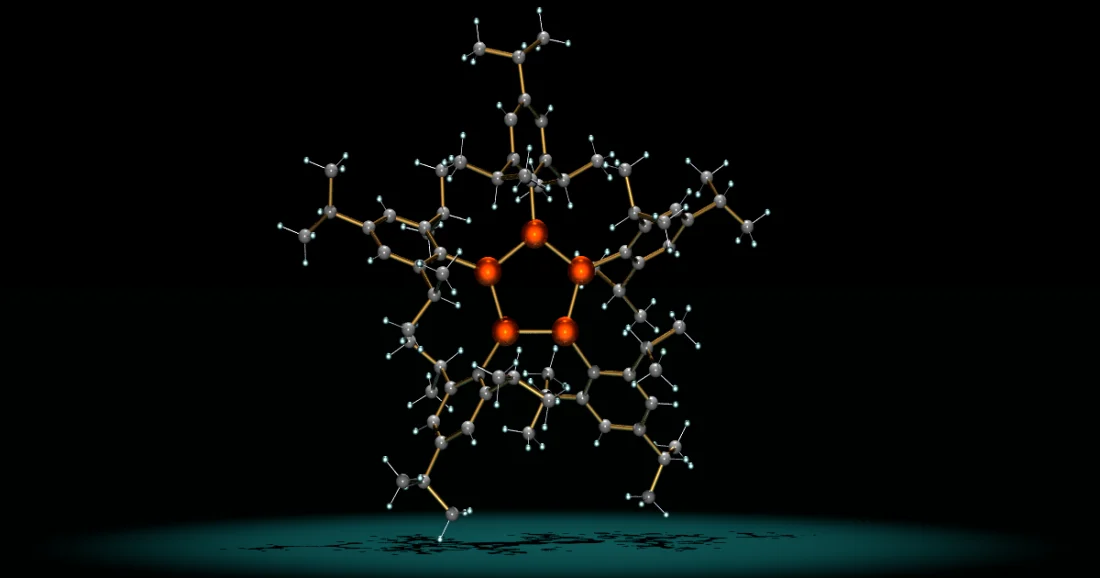
TOKYO, Feb 6 – Japanese and German researchers have independently synthesized a new class of silicon-based compounds that could expand the element’s role beyond semiconductors and industrial materials.
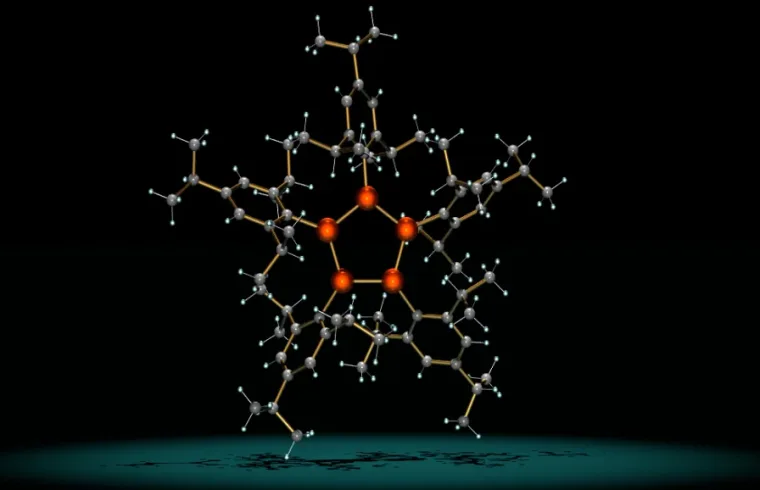
A team led by Professor Takeaki Iwamoto at Tohoku University reported the creation of pentasilacyclopentadienide, a molecule with a pentagonal silicon framework that exhibits aromaticity similar to carbon-based cyclopentadienide.
The findings were published in Science on Friday alongside parallel work from Professor David Scheschkewitz’s group at Saarland University in Germany.
Carbon’s ability to form stable π-electron compounds such as benzene and fullerene has long underpinned its role as the building block of life and modern chemistry. Silicon, though abundant and widely used in electronics and materials, has struggled to replicate these properties due to weaker π-bonding.
The Tohoku team, including graduate student Tomoki Ishikawa and Associate Professor Shintaro Ishida, overcame this limitation by stabilizing delocalized π-electrons on a nonplanar silicon skeleton. Quantum chemical calculations showed that protective groups on the framework were key to maintaining stability.
“Cyclopentadienide is a highly useful molecule in catalysts and materials science,” Iwamoto said. “We are very excited to have created a similar, stable molecule using silicon.”
Researchers say the discovery could unlock new physical properties and applications for silicon, an element with no risk of depletion.