

MUSCAT, Feb 23 – Antimicrobial resistance is intensifying as a global health threat, with few new antibiotics in the pipeline.
Researchers at Sultan Qaboos University in Oman say they have identified three antimicrobial peptides (AMPs) from dromedary camels that show strong activity against multidrug-resistant bacteria, offering a potential new line of defense.
The findings, published in Frontiers in Immunology on Jan. 21, detail how the team combined bioinformatics with laboratory assays, including colony-forming tests, membrane permeability studies and electron microscopy, to evaluate the peptides against strains such as MRSA and MDR E. coli.
Two peptides, CdPG-3 and CdCATH, demonstrated broad-spectrum antibacterial activity, damaging bacterial membranes and causing leakage while showing low toxicity to camel and human red blood cells at lower doses.
The study suggests camels’ innate immunity, including cathelicidin-like AMPs, may underpin their resilience to infections common in other ruminants. “This lays the foundation for exploring camel AMPs as therapeutics against resistant pathogens,” the authors wrote.
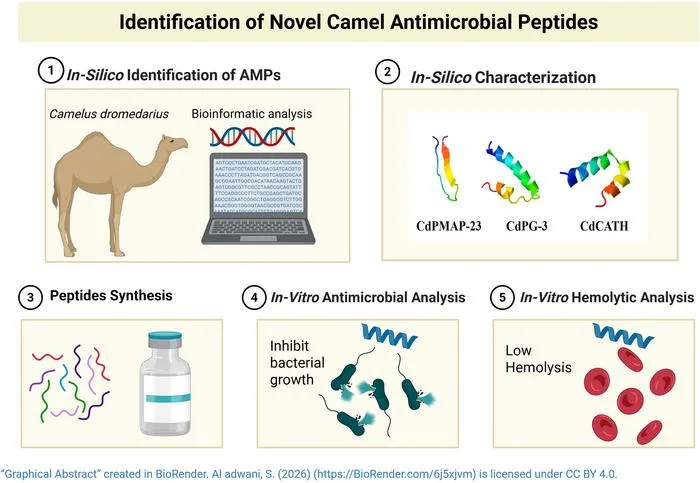
Unlike conventional antibiotics, which often face resistance through target mutations, AMPs act by disrupting bacterial membranes, reducing the risk of adaptation. The peptides also showed low hemolytic activity, supporting their safety profile.
Researchers said future work will focus on optimizing the peptides for clinical use, leveraging Oman’s camel populations as a resource.