BEIJING, Feb 10– Researchers in China have developed improved at-home test strips that can quickly and accurately detect feline and canine parvoviruses, potentially helping pet owners identify life-threatening infections earlier, according to a study published in ACS Analytical Chemistry.
The team reported that the new DNA-based lateral flow assays showed 100% sensitivity and reproducibility in veterinary clinic samples, outperforming existing commercial kits that missed several positive cases.
“Feline parvovirus (FPV) and canine parvovirus (CPV) infection can be deadly for pets, and clinical signs alone are often insufficient to rule them out,” said Peng Wu, a corresponding author of the study. “A simple at-home lateral flow strip was developed for accurate detection of FPV and CPV, allowing early identification of infections even during the incubation period.”
Parvoviruses attack rapidly dividing cells and can cause severe illness in cats and dogs, particularly when vaccinations are missed or underlying health conditions weaken immunity. Current rapid tests often lack sensitivity, leading to false negatives.
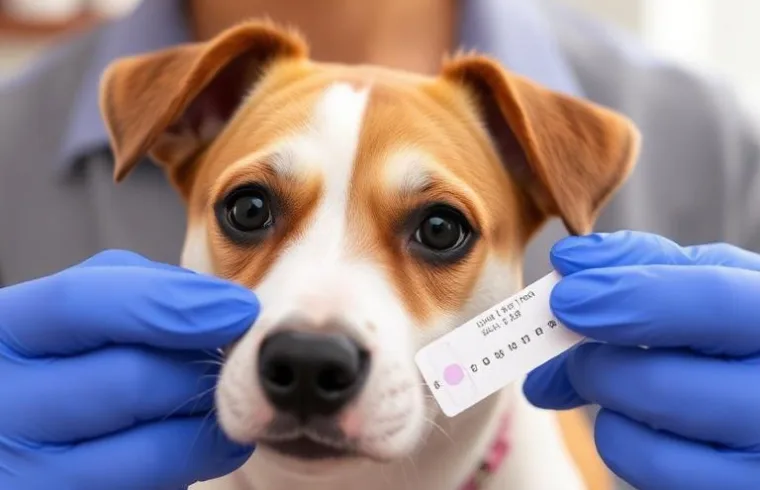
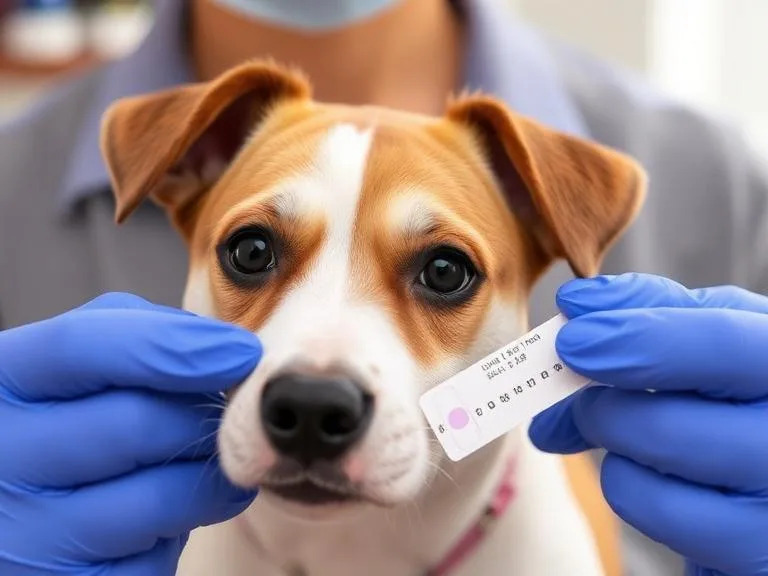
Wu and co-author Xianming Li designed a process that replicates and tags a portion of the virus’s VP2 gene in a small vial warmed by body heat. Within 35 minutes, the solution can be applied to a test strip, producing a red line if viral DNA is present.
In trials, the method correctly identified all FPV-positive and negative samples from cats and distinguished CPV infections in dogs with complete accuracy. Commercial kits failed to detect one FPV-positive and four CPV-positive cases. The researchers also developed a dual-test strip to detect FPV and feline herpesvirus, achieving up to 96% accuracy.
The study’s authors said the approach could pave the way for convenient, reliable at-home diagnostics for sick pets. The work was supported by the National Natural Science Foundation of China and the Sichuan Science and Technology Program.