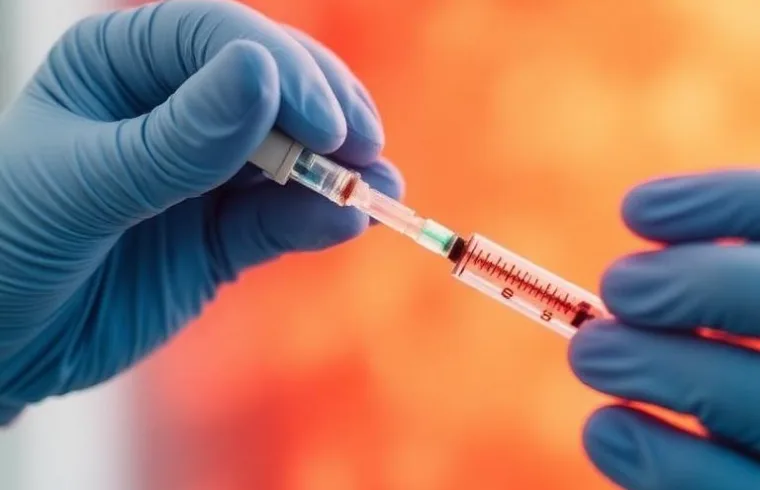
Researchers are developing a single injection that could help the heart heal after a heart attack, offering weeks of protection with one dose.
The experimental therapy, led by scientists from Texas A&M University, Columbia University and the University of Oxford, uses self‑amplifying RNA (saRNA) technology to prompt muscle cells to produce atrial natriuretic peptide (ANP), a hormone that reduces stress on the heart.
In a study published in Science, the injection triggered sustained ANP release for several weeks. “We’re trying to give patients a treatment that works with the body rather than against it,” said Ke Huang, assistant professor at Texas A&M’s Irma Lerma Rangel College of Pharmacy. “The idea that a single shot might offer support for weeks is very exciting.”
Heart attacks often leave lasting damage, weakening the heart over time. Current therapies cannot fully prevent scarring or long‑term decline. By boosting ANP during the critical recovery window, the injection aims to reduce scarring, preserve healthy tissue and improve heart function.
The approach builds on earlier work by Huang’s team, which tested a microneedle patch applied directly to the heart. Moving from an invasive patch to a simple injection marks “a huge leap forward,” Huang said, adding that the therapy could be more easily integrated into routine care.
The researchers plan further studies on safety, timing and dosing before human trials. If successful, the injection could become a new tool in heart attack recovery. “It’s easy to imagine a treatment like this being given quickly and safely,” Huang said.