SEOUL, Feb 6 – A South Korean research team has achieved a major advance in betavoltaic battery technology, developing a perovskite-based device with more than six times the efficiency of previous models, DGIST said on Friday.
The team, led by Professor Su-Il In of the Department of Energy Science & Engineering at Daegu Gyeongbuk Institute of Science and Technology (DGIST), reported an energy conversion efficiency of 10.79% in its prototype battery. That compares with the previous record of about 1.83% for perovskite-based betavoltaic cells.
Betavoltaic batteries generate electricity from beta particles released during radioactive decay and are seen as a potential alternative to lithium-ion batteries, which face limits on lifespan, safety and charging requirements. They are particularly attractive for applications in space exploration, medical implants and autonomous systems where long-term, maintenance-free power is critical.
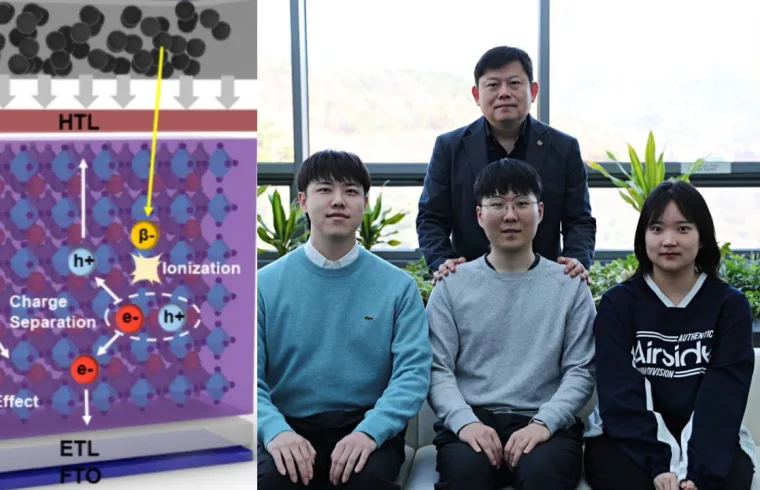
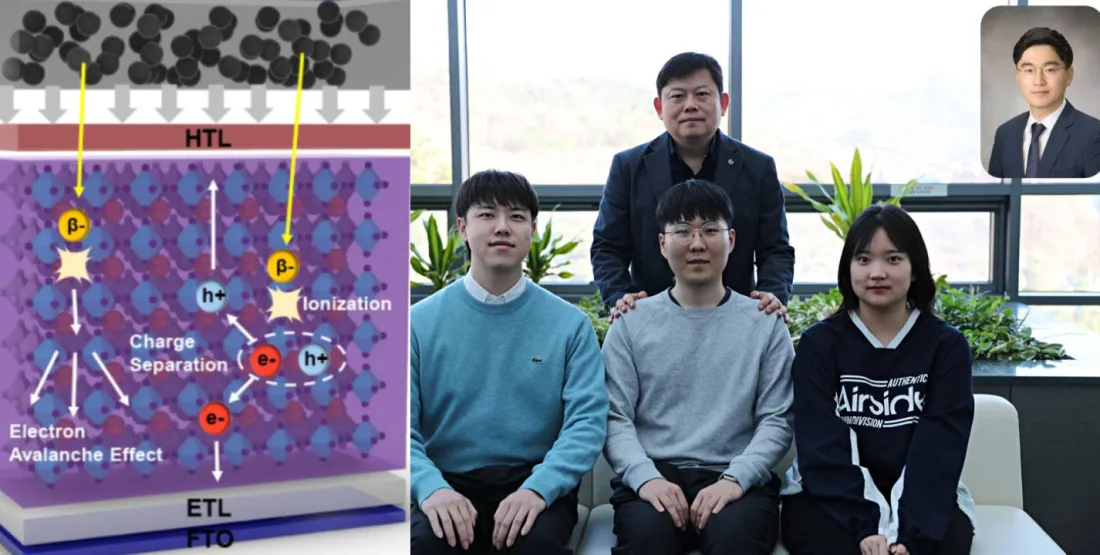
The DGIST team used carbon-14 nanoparticles as a radiation source and perovskite materials as absorbers. Working with Yonsei University’s Professor Jong Hyeok Park, the researchers applied methylammonium chloride additives and an isopropanol-based antisolvent process to improve crystal growth and reduce defects. The process enabled an “electron avalanche” effect, generating about 400,000 electrons per beta particle.
The battery maintained stable output for more than 15 hours of continuous operation, surpassing comparable international studies published in Nature in 2024, DGIST said.
“This study has overcome the low efficiency limitations of conventional betavoltaic batteries by utilizing perovskite materials and empirically achieved high efficiency exceeding 10%,” In said in a statement. He added that follow-up research would focus on commercialization for industries requiring energy self-sufficiency.
The work was supported by South Korea’s Ministry of Science and ICT, the National Research Foundation of Korea and other national research programs. Findings were published in the journal Carbon Energy.