Researchers have found that estrogen generated by aromatase in adipose tissue plays a key role in maintaining bone density, according to a study in mice.
Aromatase, the enzyme that converts testosterone to estradiol (E2), is known to influence bone health. Men with CYP19A1 loss-of-function mutations and patients treated with aromatase inhibitors often experience bone loss, suggesting that part of testosterone’s anabolic effect depends on estradiol.
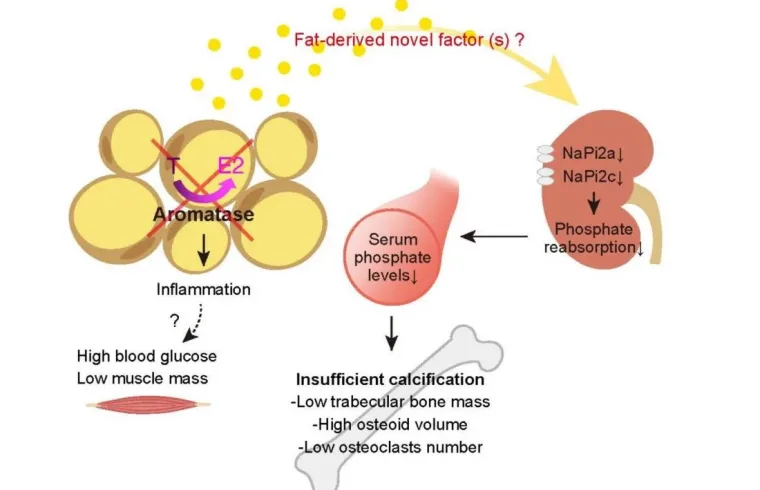
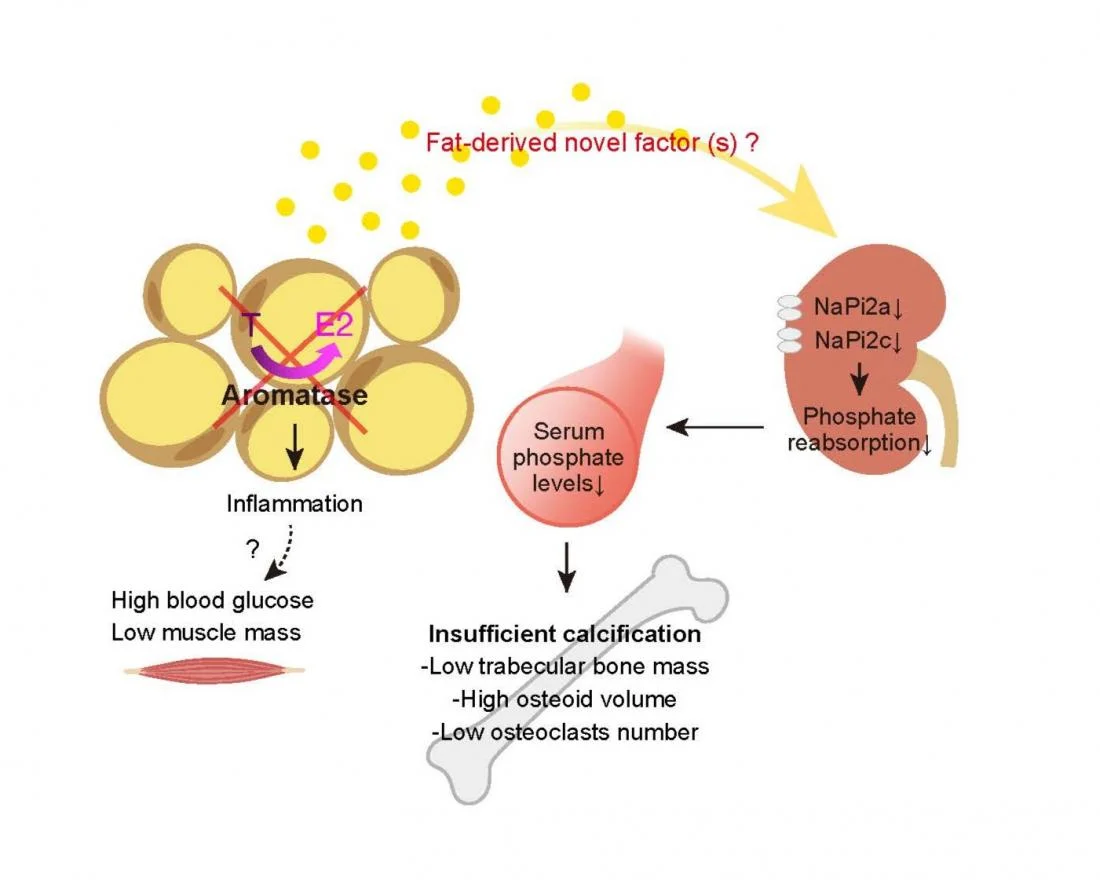
To investigate how locally synthesized estrogen contributes to bone maintenance, scientists created cell-type specific aromatase knockout mice. While osteoblast-specific knockouts showed no bone abnormalities, adipose tissue-specific knockouts (AroΔaP2) displayed significantly lower bone mineral density in the tibia and femur at 16 weeks of age, particularly in trabecular bone.
Histological analysis revealed impaired bone calcification, with increased osteoid volume and reduced osteoclast activity. The mice also showed lower serum phosphate, reduced renal phosphate reabsorption, and decreased FGF23 levels. Further examination found reduced levels of NaPi2a and NaPi2c phosphate transporters in kidney tissue.
The findings suggest that estrogen produced in fat cells helps regulate phosphate reabsorption in the kidney, thereby supporting bone mass maintenance.