NEW YORK– A study from the Child Mind Institute has shed new light on how the brain’s functional dynamics mature from childhood to adulthood, offering insight into the emergence of complex cognitive abilities.
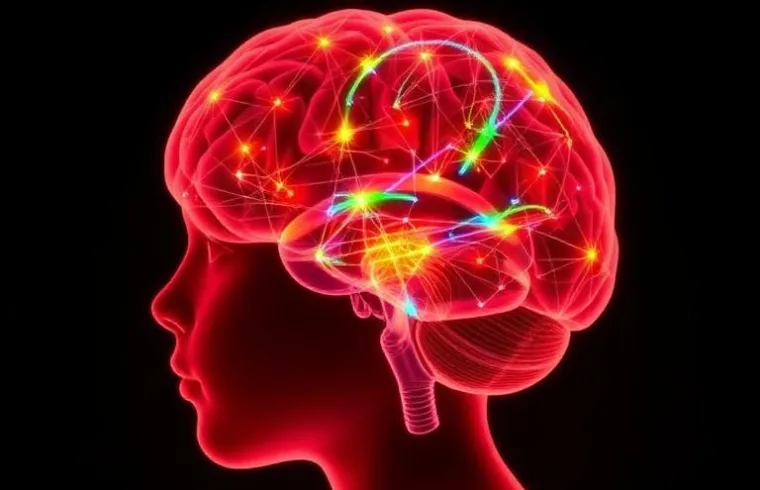
Published in Nature Communications, the research used a novel method called Complex Principal Components Analysis (CPCA) to track the flow of brain activity across regions, rather than simply measuring synchronization. The approach allowed scientists to examine the directionality of brain activation.
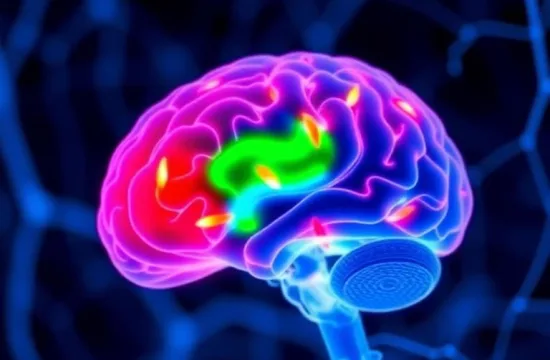
Led by Ting Xu, PhD, director of the Center for Integrative Developmental Neuroscience, the team found that children display adult-like activation patterns by age eight. Three distinct propagation patterns were identified: one linked to basic sensory processing, another to hierarchical processing between sensory and association cortex, and a third involving attention and default mode networks.
“As children mature into adolescence and early adulthood, they spend progressively more time in a pattern we call sensorimotor-to-association, or S-A, which coordinates sensory information with higher-order cognitive functions,” Xu said.
The study highlighted a shift toward “top-down” propagation — activity flowing from higher-order association areas to lower-level sensory regions — which increases with age and predicts cognitive performance more strongly than “bottom-up” propagation. Xu said this transition supports abstract thinking, reasoning, and executive functions that emerge during adolescence.
The findings were consistent across multiple methods, stable at the individual level, and replicated in an independent youth cohort. Data came from open-source projects including the Human Connectome Project and the Nathan Klein Institute Rockland Sample.
“This research provides compelling evidence that the maturation of brain dynamics directly supports increased cognitive function during adolescence,” Xu said, adding that the work could inform future studies on neurodevelopmental disorders and targeted interventions.