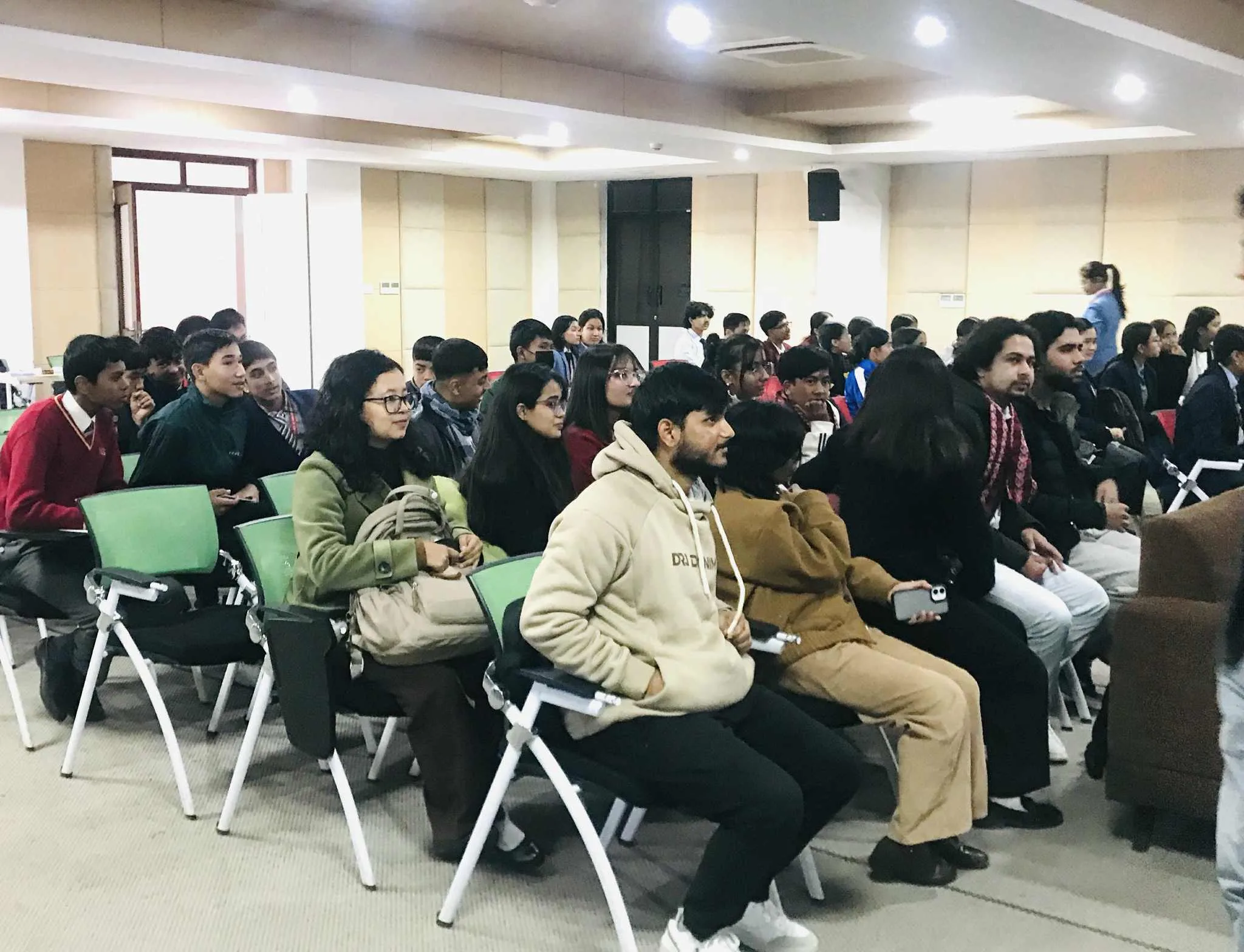
Bhaktapur — How do numeracy problem-solving skills in physics help us find solutions to real-world challenges? This has become a subject of interest to many. It is often said that Physics has made human life easier.
Physics-based skills are said to help us transform theoretical knowledge into practical solutions. According to experts, science is not only a subject of study but also a way to produce tools that improve life. For students, such skills are considered fundamental knowledge to understand and solve real-world problems.
On this basis, physics mainly helps in prediction, engineering and technology, solving everyday problems, traffic calculations, mobile GPS, and even food preparation, etc. Therefore, experts emphasize that education should be practical and research-oriented.
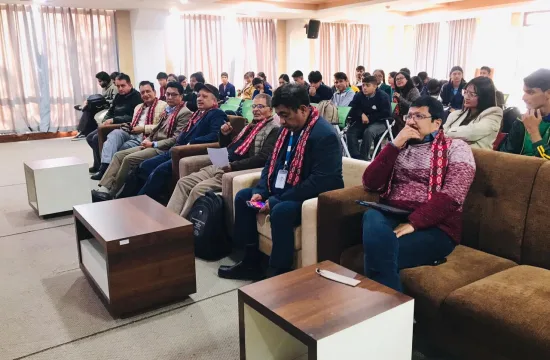
Kathmandu World School, in collaboration with the Institute of Physics (IOP), Nepal Physical Society, Kathmandu Institute of Applied Sciences (KIAS), PABSON Surya Vinayak, and Dynamic Education, organized a two-day workshop for students from various schools in Surya Binayak Municipality.
Academic Director Yangkila Lama said science and technology activities carry special importance for the school. “We conduct various creative activities, but practical knowledge-based education must begin from grade one,” she said. “Education has always been important, but time-appropriate education is the demand now.”
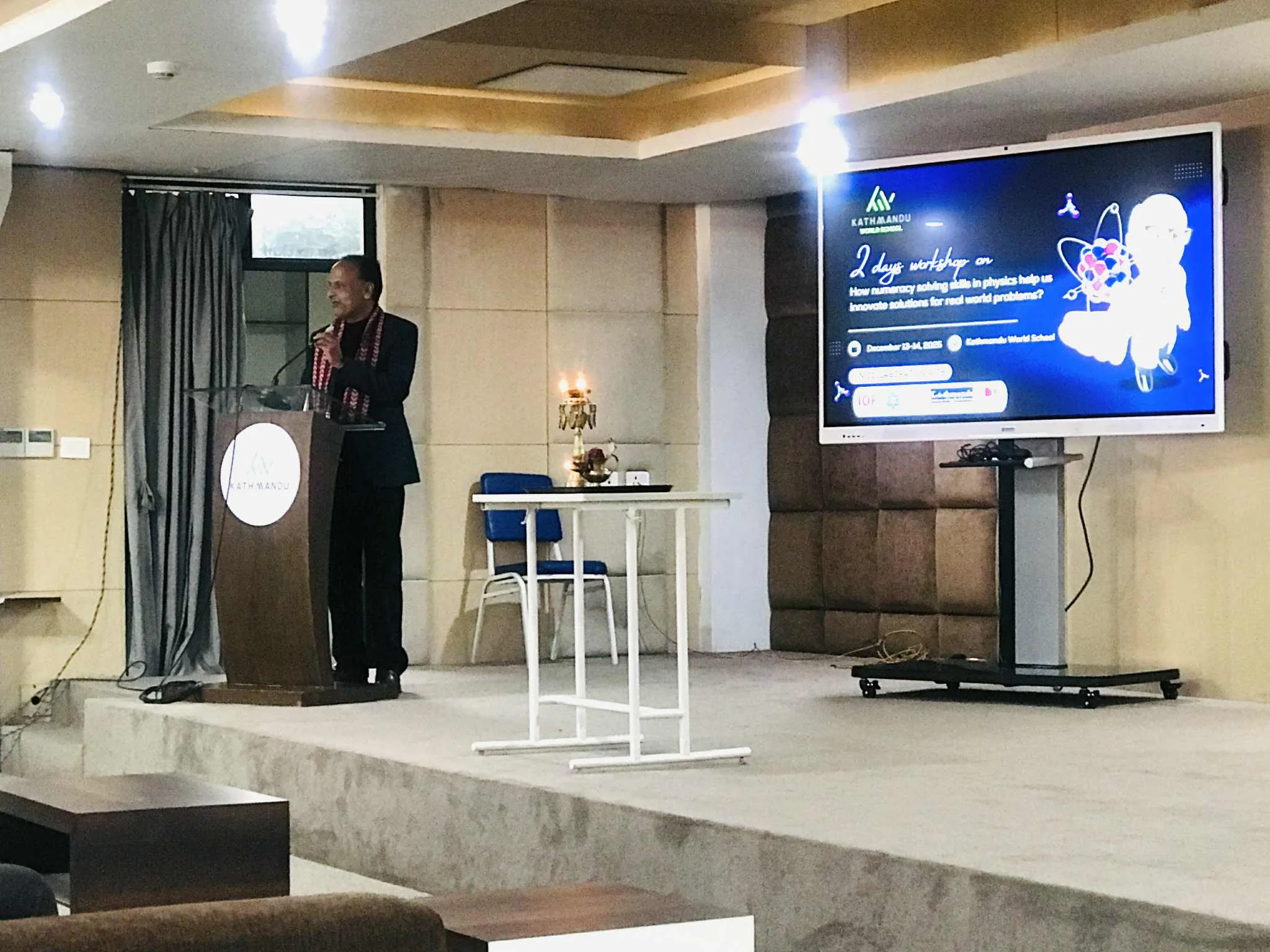
Binod Kafle, President of PABSON Surya Binayak, Bhaktapur, said such creative activities provide life-useful education for students. He added that his organization has been raising its voice for ensuring students’ future, protecting private school property, and safeguarding educational rights.
Dr. Manoj Kumar Thakur, Secretary of the Nepal Physical Society, noted that everything around us is based on the laws of Physics. He said, “Physics applied to electricity production and consumption can improve efficiency in energy and resource management.”
Dr. Basanta Giri, President of the Kathmandu Institute of Applied Sciences (KIAS), has previously conducted research into the effectiveness of commonly used masks. His findings revealed that plastic particles from human use can penetrate the brain and body. Studies, including those carried out in Nepal, have shown that invisible microplastic particles pose serious health risks.
He added, “Physics and Mathematics help us understand nature, which makes humans creative.” He also mentioned that KIAS recently confirmed through research that the amount of Iodine in salt consumed in Nepal is higher than necessary.
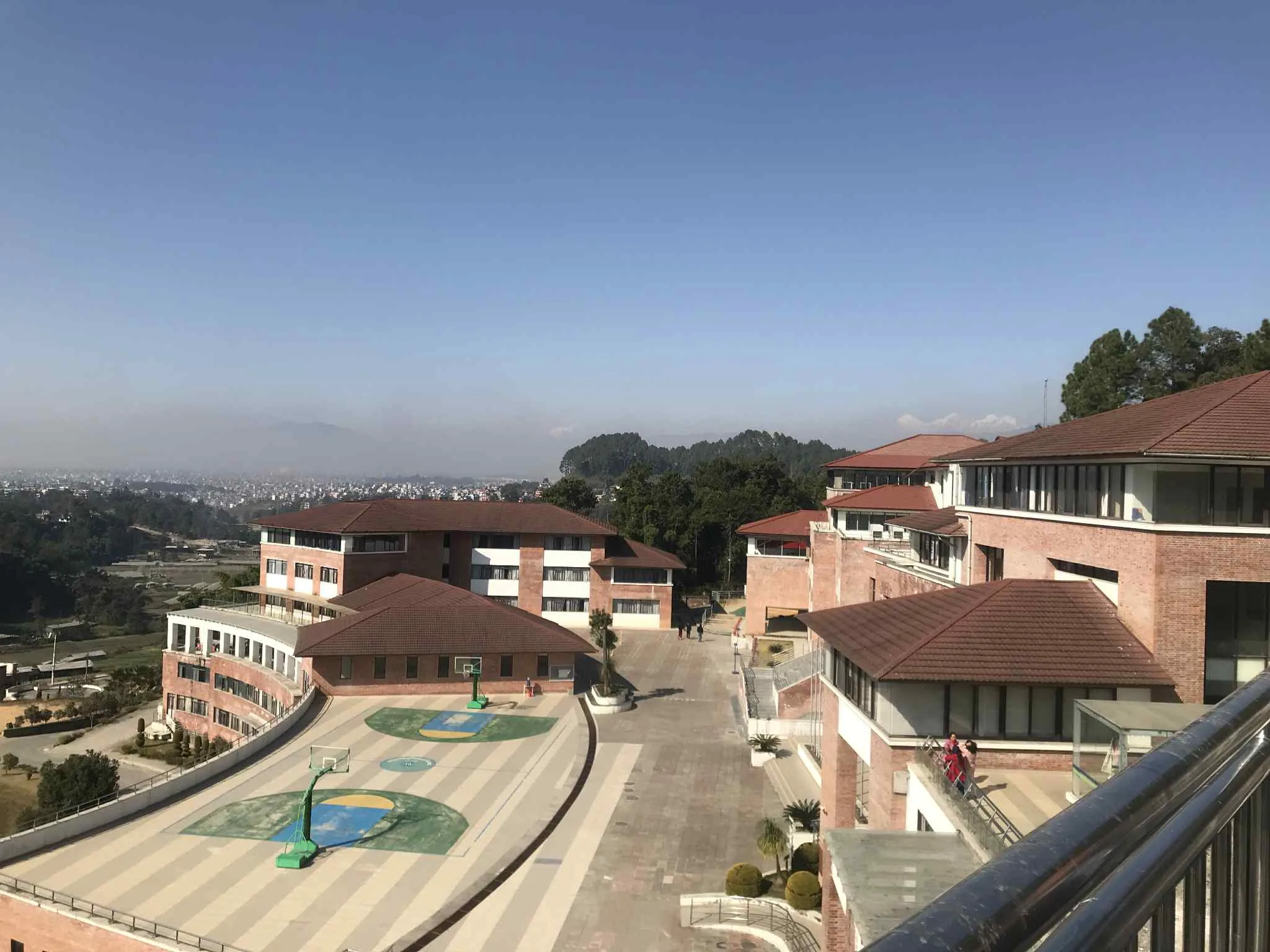
Life-Useful Education
Understanding acid and base in daily life is equally important. For example, oranges are considered acidic because they taste sour. Science confirms this through simple methods like the litmus paper test, which is taught to school-level students. Researcher Alisha Bogati from KIAS was spreading such knowledge.
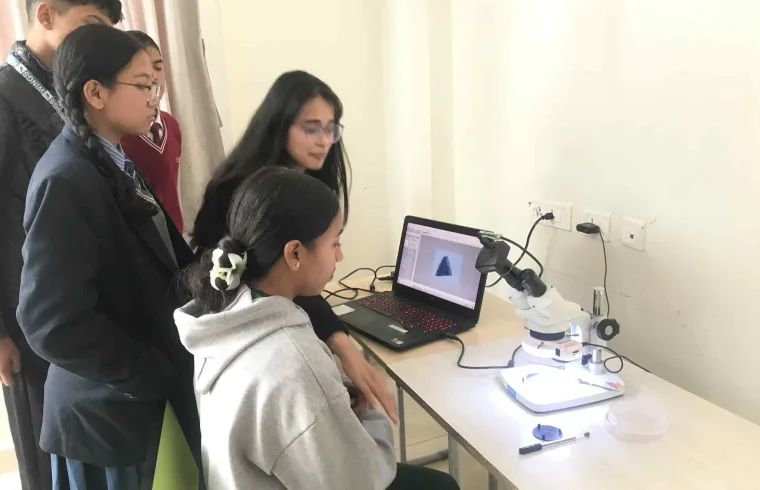
Mentor Ayusha Upreti from KIAS informed students about the effects of microplastics on health. She explained that students would learn through experiments how to use a stereo microscope in microplastic research, followed by data processing methods and software.
Researcher Sapana Bhujel from KIAS, who studies air quality, informed students about air pollution in Nepal and its impact on human health. She explained that fine particulate matter, such as PM10 and PM2.5 particles, can reach the lungs and even cause cancer.
Students were taught why air pollution studies are necessary and how research is conducted.
Grade 10 student Diya Khatri from Little Garden Secondary School in Surya Binayak Municipality said she gained detailed knowledge about microplastics. Aspiring to enter the medical field, she noted that microplastics affect not only the environment but also human health. “Although microplastic problems cannot be fully solved, they can certainly be reduced,” she said.
Music from Sound Waves
Khagendra Kumar Sharma, an engineering student at Kathmandu Engineering College, Kalimati, taught how physics principles can be observed in daily life. He explained that if there is a moving particle with a visual representation, one can understand how music is created based on its position and velocity.
“Students will learn practical knowledge of how sound is represented based on position, velocity, and momentum,” he said.
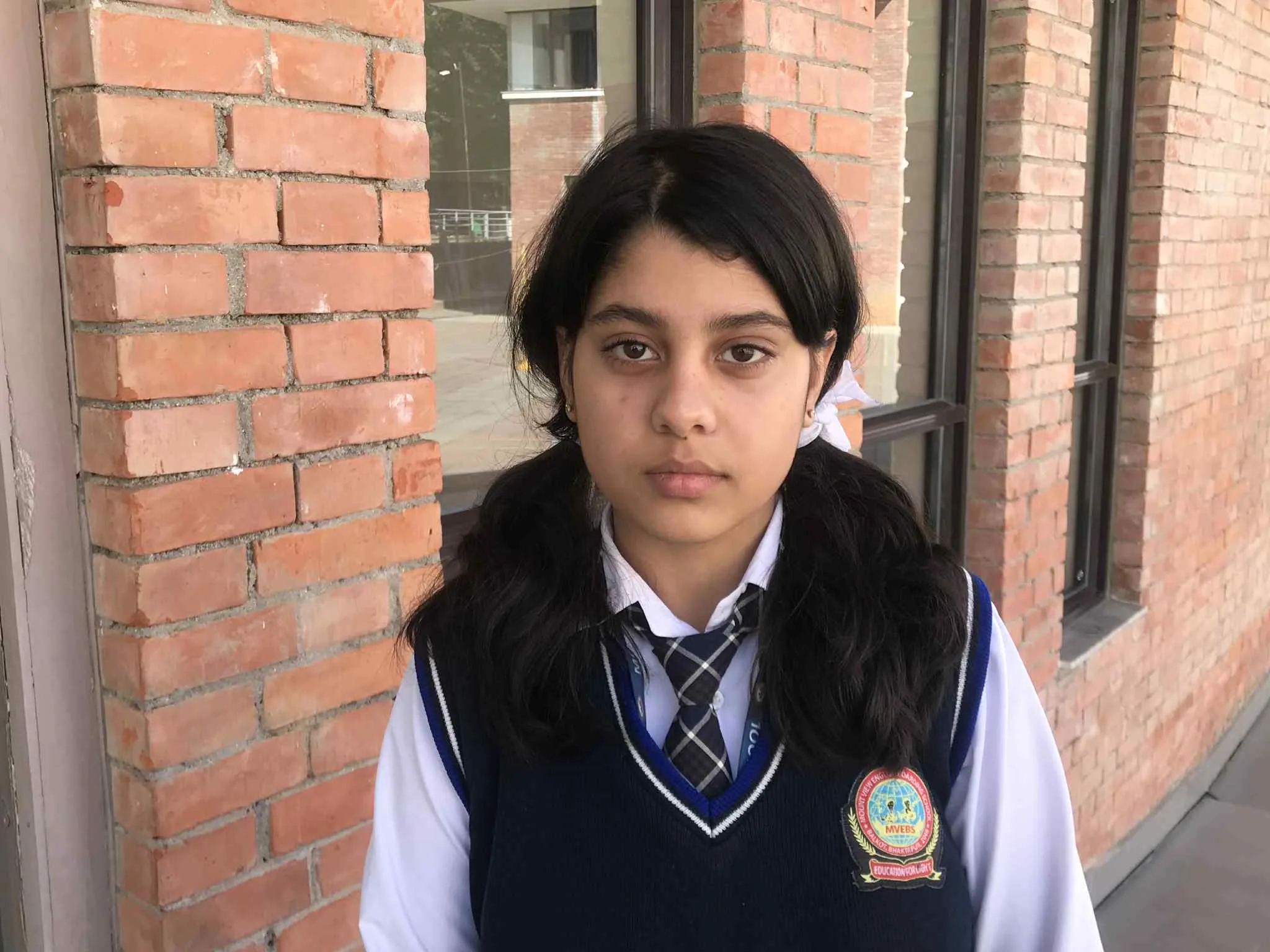
Student Saman Dhakal, who attended Sharma’s session, said: “On the first day of the workshop, I learned how music is created from sound science and wavelength.” She is a grade 10 student at Mount View School, Balkot, Bhaktapur, aspiring to study astronomy. She expressed happiness at learning new aspects of physics for the first time.
Vehicle Calculations
Within the framework of physics laws, car speed is calculated using distance and time. This helps in following traffic rules and preventing accidents. Grish Chaulagai, an A-level graduate from Kathmandu World School, expanded students’ knowledge in this area.
He explained how theoretical physics is applied in road safety measurement tools. He taught grade 9 and 10 students why road guns are used and how accidents occur.
Engineering and Technology
When designing bridges, buildings, or machines, force and stress are calculated using arithmetic equations. In addition, gravity, force, and energy equations are used to make buildings earthquake-resistant. Engineers say this ensures structural safety.
Similarly, in machine design, force and motion calculations in gears, motors, or turbines can increase efficiency.
Umesha Mainali, an architecture student at Thapathali Engineering College, taught about the risks posed by buildings in earthquake-prone areas and their solutions. “In a country like ours with earthquake risks, such knowledge helps us take precautions when building houses or create earthquake-resistant structures,” she said.
Sanjok Samal Magar, a civil engineering graduate from Cathford Engineering and Management College, provided practical knowledge on landslide science, discussing prevention measures and observation methods.
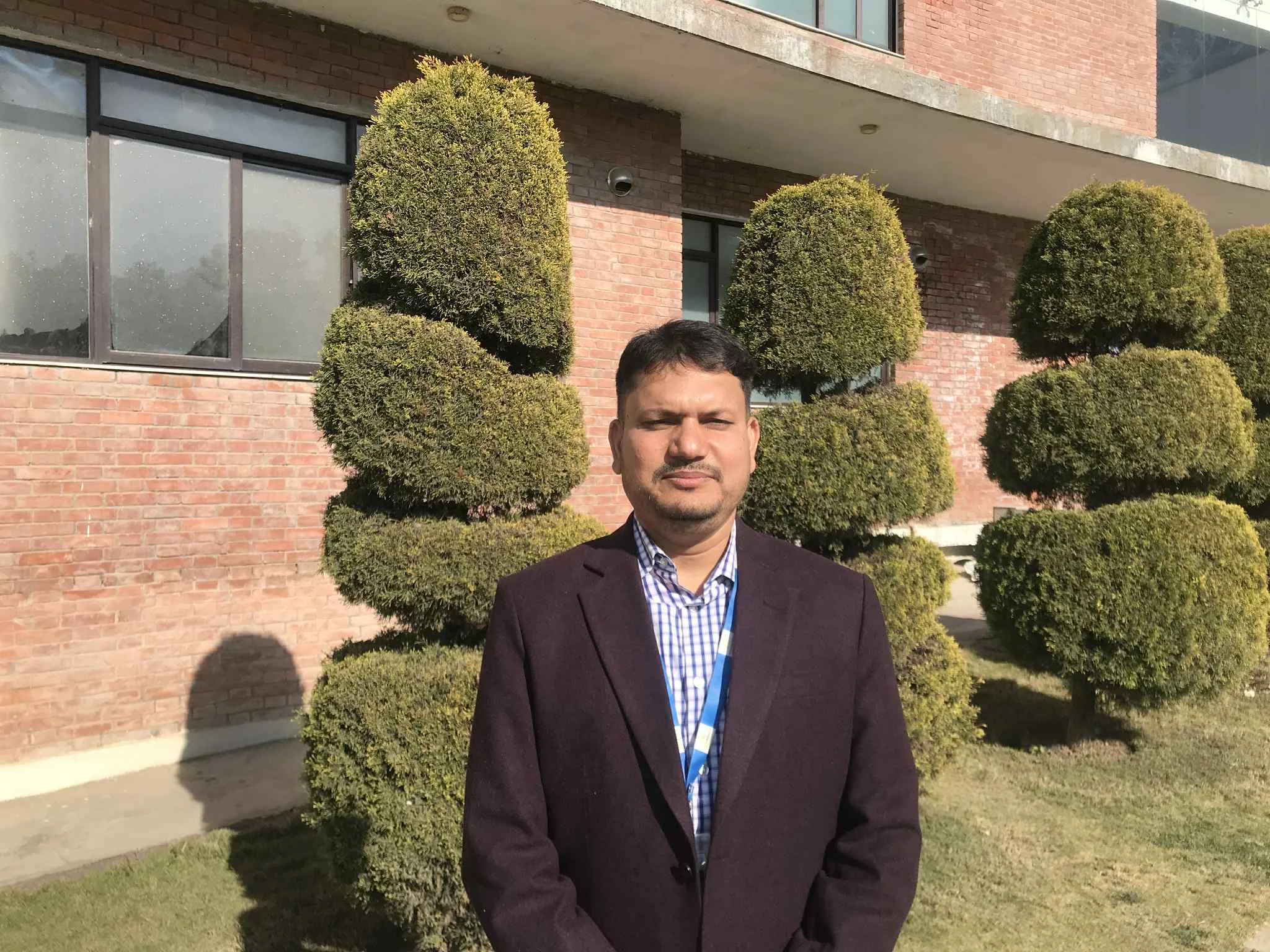
Workshop coordinator Rijendra Thapa said: “This workshop will help students apply physics-based numerical problem-solving skills to real community challenges.” He noted that although basic physics knowledge is used daily in Nepal, it has not been effectively delivered to students.
He added, “This workshop was organized to supplement the physics knowledge included in school curricula.”
According to him, around 70 students from Surya Binayak Municipality benefited from the program.