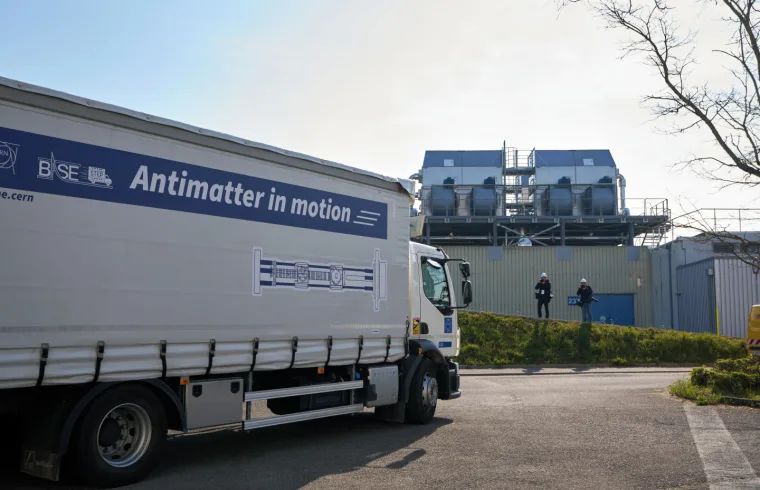
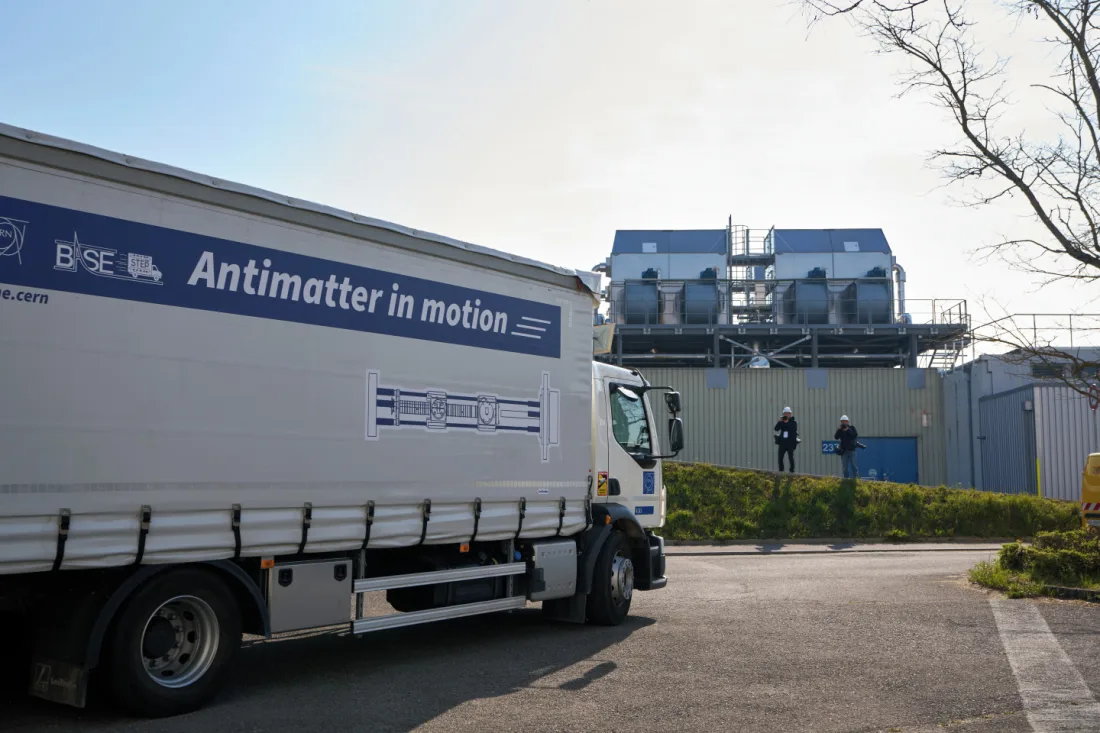
GENEVA, March 24 – Scientists at CERN have achieved a world-first by transporting antimatter across the laboratory’s main site, marking a breakthrough in efforts to study the fundamental properties of the Universe.
Researchers from the BASE experiment successfully moved a portable cryogenic Penning trap containing 92 antiprotons in a truck, resuming operations after the transfer. Antimatter is notoriously difficult to preserve, as it annihilates upon contact with matter, making the achievement a milestone in experimental physics.
The BASE collaboration developed the BASE-STEP trap, a 1,000-kilogram apparatus equipped with a superconducting magnet, cryogenic cooling and vacuum systems, designed to withstand transport vibrations. The ultimate goal is to deliver antiprotons to precision laboratories in Europe, including Heinrich Heine University Düsseldorf, for high-accuracy measurements.
“Transporting antimatter is a pioneering and ambitious project, and I congratulate the BASE collaboration on this impressive milestone,” said Gautier Hamel de Monchenault, CERN’s Director for Research and Computing.
Physicists hope such experiments will shed light on one of science’s biggest mysteries: why the Universe contains matter but almost no antimatter, despite theories suggesting the Big Bang should have produced equal amounts of both.
BASE spokesperson Stefan Ulmer said magnetic field fluctuations at CERN’s antimatter facility limit measurement precision, making off-site experiments essential. “The precision of our measurements is such that gaining an even deeper understanding of antiprotons will require moving the experiment out of the building,” he said.
The team now faces the challenge of maintaining cryogenic conditions during long-distance transport and safely transferring antiprotons at their destination without loss.
This achievement paves the way for future collaborations across Europe, potentially deepening understanding of antimatter and its role in the origins of the Universe.