
TOKYO, May 27 – Scientists in Japan have developed a new type of oxide glass with unprecedented mechanical strength, opening the door to industrial applications that previously relied on chemical strengthening or specialized laser-based techniques.
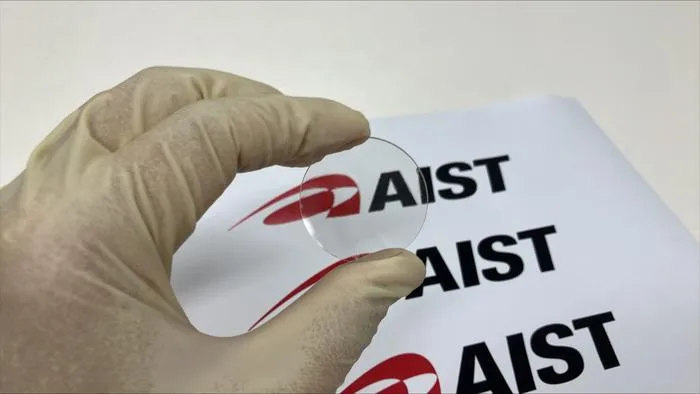
The team, led by Dr. Hirokazu Masai at the National Institute of Advanced Industrial Science and Technology (AIST), successfully fabricated colorless, optically transparent glass with a Young’s modulus exceeding 130 GPa using conventional melt-quenching methods. The samples, more than 3 mm thick and 60 mm in diameter, demonstrate that high-elastic-modulus glass can be produced at scale without resorting to niche laboratory processes.
Glass is widely used in applications from light bulb casings to optical fibers. Demand for stronger materials has grown as industries seek greater reliability. Conventional chemical strengthening, which relies on ion exchange at the surface, has long posed challenges, including restrictions on minimum thickness and the generation of alkali waste.
Key findings of the study include:
- Transparent oxide glass with Young’s modulus above 130 GPa was fabricated without chemical or physical strengthening.
- Fiber potential: thermal analysis suggests fibers with nearly twice the modulus of conventional glass fibers could be drawn.
- Low expansion: thermal expansion coefficient below 80 × 10⁻⁷ K⁻¹, tunable via composition.
- Glass-ceramic improvement: controlled crystallization may further enhance modulus.
The breakthrough offers a pathway for designing novel oxide glasses with high hardness, elastic modulus, and improved fracture toughness. Potential applications include electronic devices, optical components, and fiber-reinforced composites.
Because the glass is produced using melt-quenching — a standard industrial process — it can be readily integrated into existing manufacturing systems. One promising application is highly elastic thin cover glass, which could be produced without chemical surface modification.
Dr. Masai said the development highlights the potential of advanced oxide glass as a high-value functional material, combining durability with scalability.