Japan— Kanazawa University and Kyoto University researchers have directly visualized how densely packed macrocyclic host molecules capture guest molecules on a surface, according to a study published May 20 in the Journal of the American Chemical Society.
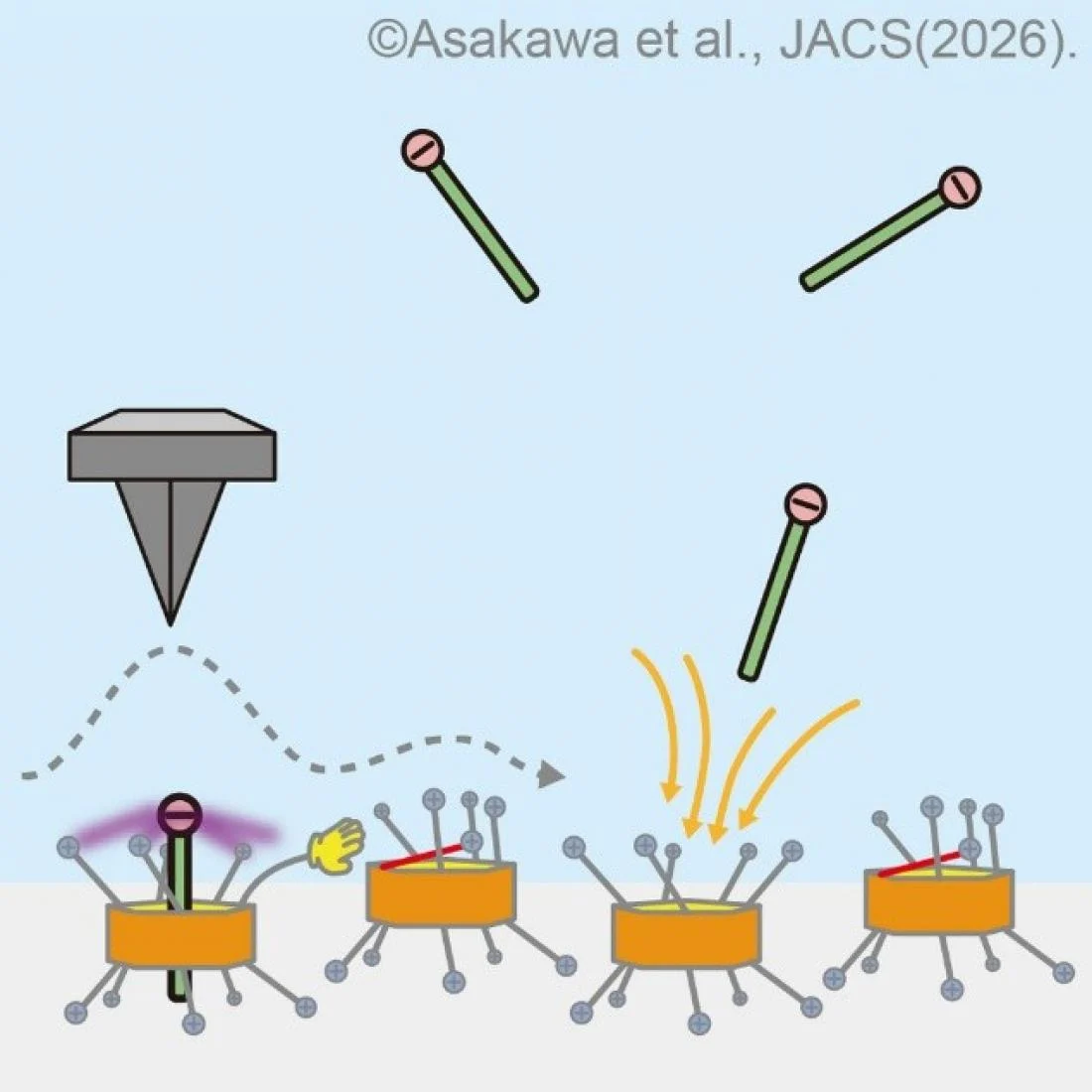
Using two advanced atomic force microscopy (AFM) techniques, the team observed host–guest complex formation and reversible binding dynamics at the single-molecule level. The findings show that when one macrocyclic molecule binds a guest, neighboring host molecules are more likely to capture additional guests — a cooperative effect that only emerges when the molecules are tightly assembled.
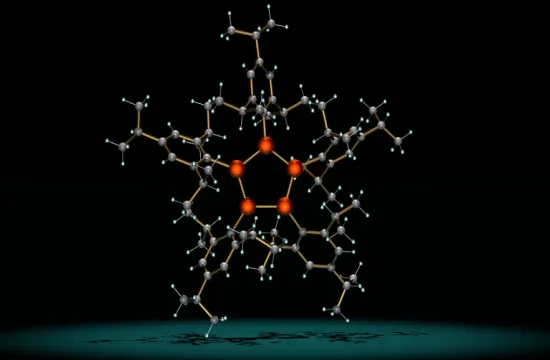
The study employed pillar[5]arene (P[5]A), a ring-shaped host molecule, assembled on a substrate. Frequency modulation AFM revealed structural changes of less than 100 picometers and showed that guest binding at one site promoted further binding about 3 nanometers away. Molecular dynamics simulations indicated that steric constraints among neighboring molecules drive this cooperative behavior. High-speed AFM captured repeated association and dissociation events, with lifetimes ranging from milliseconds to seconds.
Researchers say the work provides new insight into how surface-confined molecular interactions generate cooperative effects, with potential applications in chemical sensors, separation systems, and storage materials. The article is available open access, supported by Kanazawa University’s 2026 Open Access Promotion APC Support Program.