Scientists in Japan say they may have found a way to better predict how species respond to environmental change — by looking at a handful of simple biological traits.
A long-term ecological study led by Yokohama National University has revealed that body size, mobility and lifespan can offer striking clues about which species are most vulnerable to shifting conditions. The findings, published in Nature Communications on 14 March, could help shape more proactive conservation strategies.
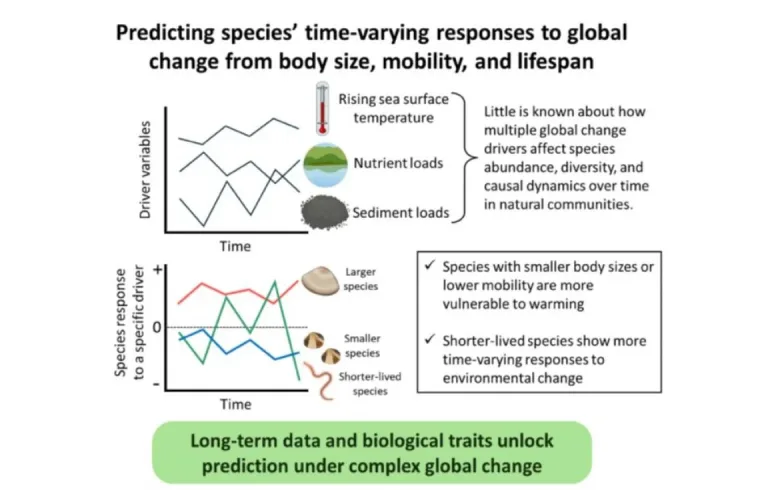
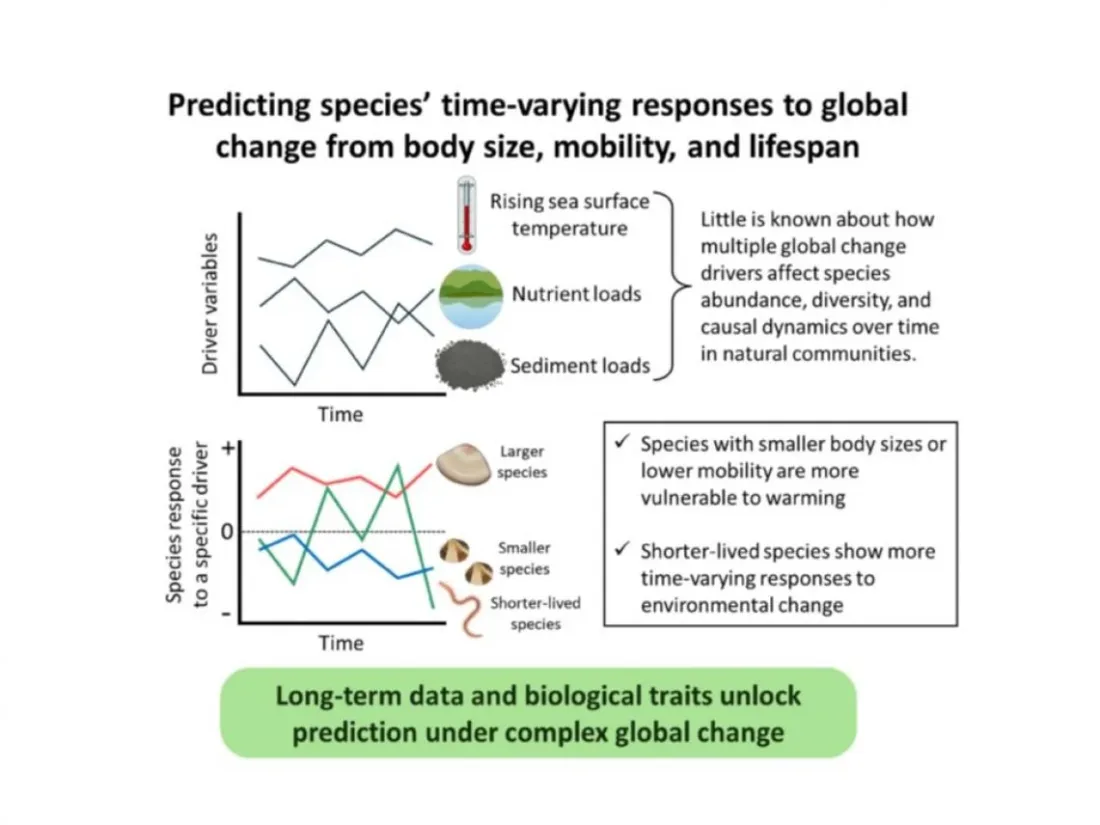
In nature, species face multiple pressures at once, from rising temperatures to changes in water and sediment. Yet most research has examined these drivers in isolation.
“We wanted to tackle a central problem in ecology: why species are so hard to predict under real-world environmental change,” said Professor Takehiro Sasaki, the study’s lead author. “Species don’t respond the same way from year to year, and most approaches don’t capture that.”
The team analysed decades of high-resolution data on climate, freshwater and sediment alongside estuarine macroinvertebrate populations. Using nonlinear time series analysis, they explored how species respond to multiple drivers simultaneously — and how those responses shift over time.
Their results suggest that smaller, less mobile species are consistently more negatively affected by warming, while short-lived species show far more variable responses. Lifespan, the researchers argue, is closely linked to whether a species’ sensitivity remains stable or fluctuates.
“Simple traits carry powerful predictive information,” Sasaki explained. “This means we can begin to predict not just which species are vulnerable, but which ones are likely to respond in erratic ways as the environment shifts.”
The study highlights how long-term, real-world data can reveal dynamics that short-term experiments often miss. The researchers have introduced a new framework linking biological traits to time-varying environmental responses, offering a foundation for turning observation into prediction.
Looking ahead, the team plans to test the framework across different ecosystems and incorporate more detailed trait data. Their ultimate aim is to flag vulnerable species before declines occur — making conservation faster, smarter and more proactive.