
BEIJING – A new research framework published in Engineering proposes a streamlined approach to drug discovery from Chinese herbal medicines (CHMs), aiming to overcome long-standing hurdles in turning natural products into approved pharmaceuticals.
CHMs have been central to traditional Chinese medicine and have produced landmark drugs such as artemisinin and ephedrine. Yet only 23.5% of new drugs approved by the U.S. Food and Drug Administration over the past four decades have originated from botanical sources.
Researchers say the shortfall reflects the complex chemical makeup of CHMs and their poorly understood multitarget mechanisms, which have hindered modern drug development.
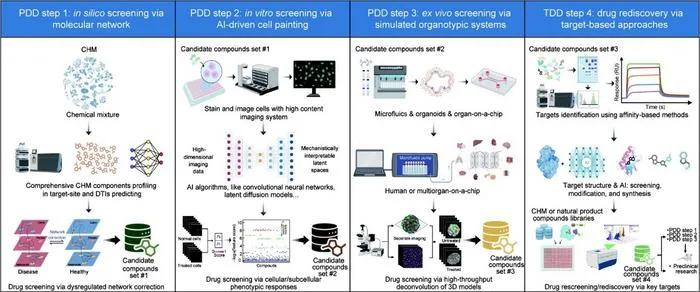
The study introduces a “phenotype–target coupled drug screening” (PTDS) strategy, combining phenotypic drug discovery with target-based methods. Phenotypic screening, which identifies compounds based on functional changes rather than predefined molecular targets, has historically driven most first-in-class drug approvals.
PTDS applies hierarchical phenotypic screening across molecular, cellular, tissue and organism levels to locate active compounds, then uses target deconvolution to support rediscovery through target-based approaches.
Advanced technologies underpin the framework, including multiomic integration, AI-driven drug–target interaction prediction, high-resolution metabolomics, spatial mass spectrometry imaging, and AI-enhanced cell painting. Organoid and organ-on-a-chip models further replicate tissue function for preclinical testing.
Researchers caution that challenges remain, including data integration, AI interpretability, and limitations in organoid vascularization. Still, they argue PTDS offers a resource-efficient pipeline that narrows candidate scope, clarifies CHM efficacy, and reduces failure risks in preclinical and clinical development.