
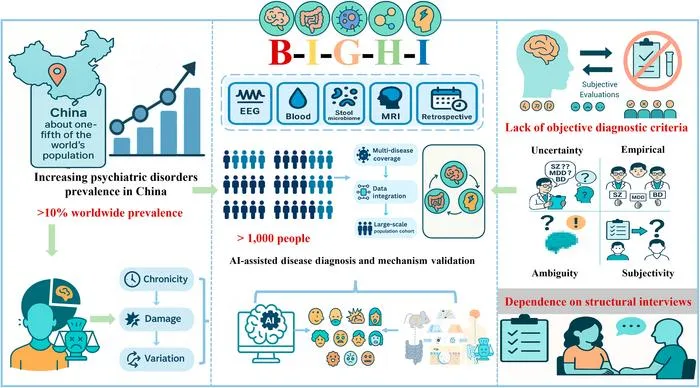
GUANGZHOU – Psychiatric disorders such as schizophrenia, depression, and bipolar disorder affect about one in seven people worldwide, yet their biological underpinnings remain elusive.
A team of Chinese researchers has launched a landmark study to probe the role of the brain–gut connection in mental illness, aiming to identify biomarkers that could transform diagnosis and treatment.
The Brain–Gut Health Initiative (BIGHI), led by Professors Fengchun Wu and Yuanyuan Huang of Guangzhou Medical University and Professor Kai Wu of the South China University of Technology, is the first prospective cohort in China dedicated to investigating the microbiota–gut–brain axis in psychiatric disorders. Findings from the study were published in Research on Jan. 1, 2026, and made available online on Mar. 3.
BIGHI has enrolled more than 1,200 participants aged 18 to 45, including patients and healthy controls. Subjects undergo extensive testing ranging from clinical evaluations and neurocognitive assessments to MRI scans, EEG recordings, blood profiling, fecal genomic sequencing, and lifestyle surveys. The integrated approach is designed to map biological signatures across systems.
Early results point to promising biomarkers. EEG patterns known as neural microstates were linked to symptom improvement in schizophrenia following neuromodulation therapy, while reduced alpha-band activity was observed in patients with depression.
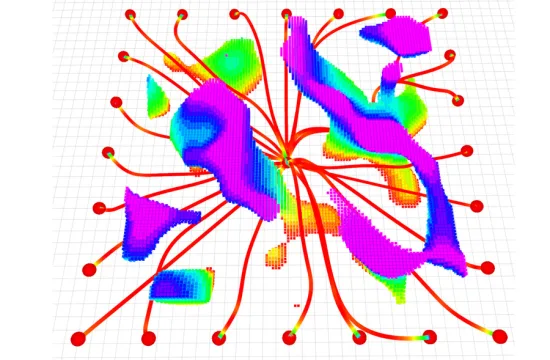
Neuroimaging revealed widespread brain network changes, with machine learning models distinguishing schizophrenia patients from healthy individuals and identifying connectivity patterns tied to suicidal thoughts in bipolar disorder and childhood trauma in depression.
Gut microbiome analysis showed psychiatric patients had fewer short-chain fatty acid–producing bacteria and more pro-inflammatory microbes, correlating with symptom severity, oxidative stress and cognitive decline. Combined brain–gut data suggested that brain-derived profiles aligned with symptom severity, whereas gut-derived profiles were more closely tied to cognitive performance. The study also found evidence of accelerated biological aging in schizophrenia patients.
Although currently limited to a single research center, BIGHI is among the most comprehensive efforts to characterize psychiatric disorders using multi-omics data. The researchers say expanding the initiative could pave the way for biomarker-driven diagnostics, microbiome-based therapies, neuromodulation strategies, and AI-powered management tools.
“By integrating brain and gut data, we are uncovering mechanisms that may revolutionize psychiatric care,” the authors said. “This initiative supports advances in personalized treatment strategies and offers hope for better mental healthcare.”