Taipei, May 15 – Wastewater treatment is shifting beyond its traditional role of removing pollutants, as climate change, carbon reduction, and resource recovery drive demand for smarter infrastructure.
Ammonia-nitrogen has emerged as a key focus. Poorly managed, it can damage aquatic ecosystems and increase treatment costs. But when recovered, nitrogen can be reused, supporting a circular economy.
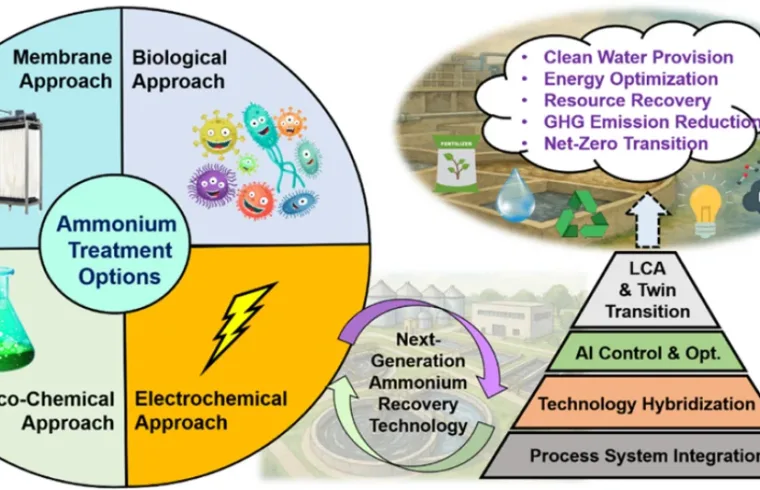
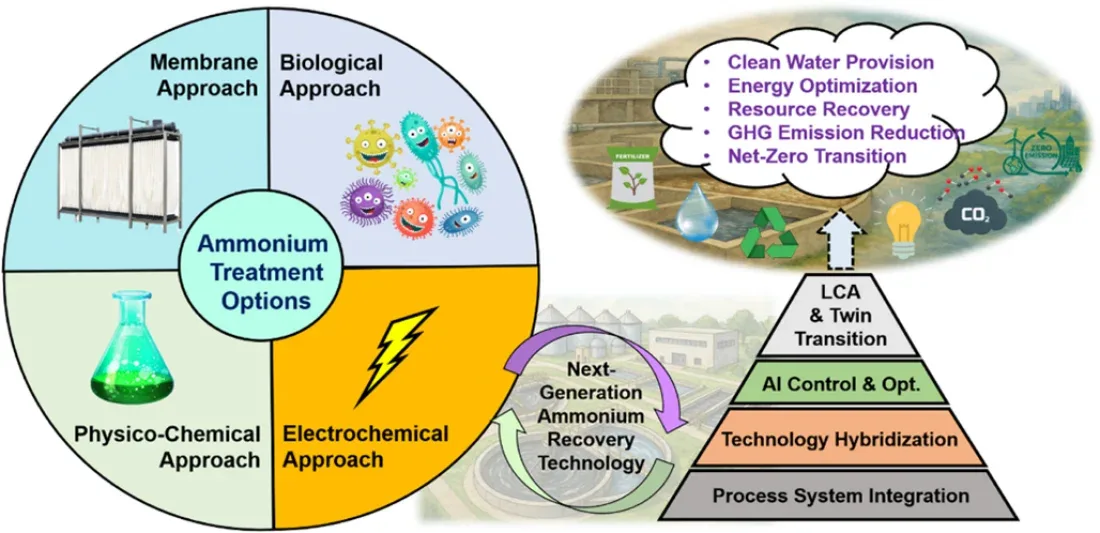
A study published in Water Research highlights the role of the “Twin Transition” – combining green transformation with digital transformation – in shaping the future of wastewater management. The approach calls for systems that are not only sustainable but also data-driven and easier to control.
Nitrogen management is particularly complex, often influenced by fluctuating conditions. The study argues that wastewater treatment should move beyond pollutant removal, treating ammonia-nitrogen as part of a broader nitrogen cycle. With improved design, monitoring, and decision-making tools, plants could recover nutrients, cut emissions, and enhance resource circulation.
Digital technologies such as sensors, data analytics, process modeling, and intelligent control are seen as critical to improving stability and reducing energy use. Green technologies, meanwhile, can lower environmental impacts and make nitrogen recovery more feasible.
“The twin transition provides a new pathway for connecting digital innovation with sustainable nitrogen management, helping wastewater systems move from pollution control toward circular resource recovery,” said Prof. Shu-Yuan Pan of National Taiwan University’s Department of Bioenvironmental Systems Engineering.