
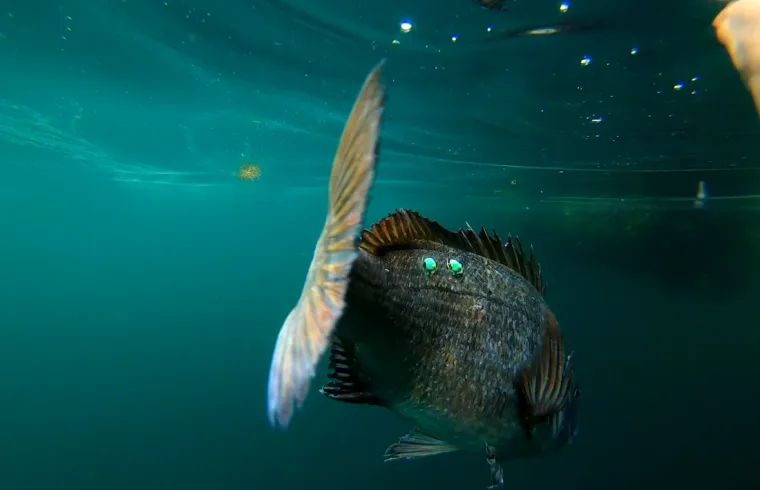
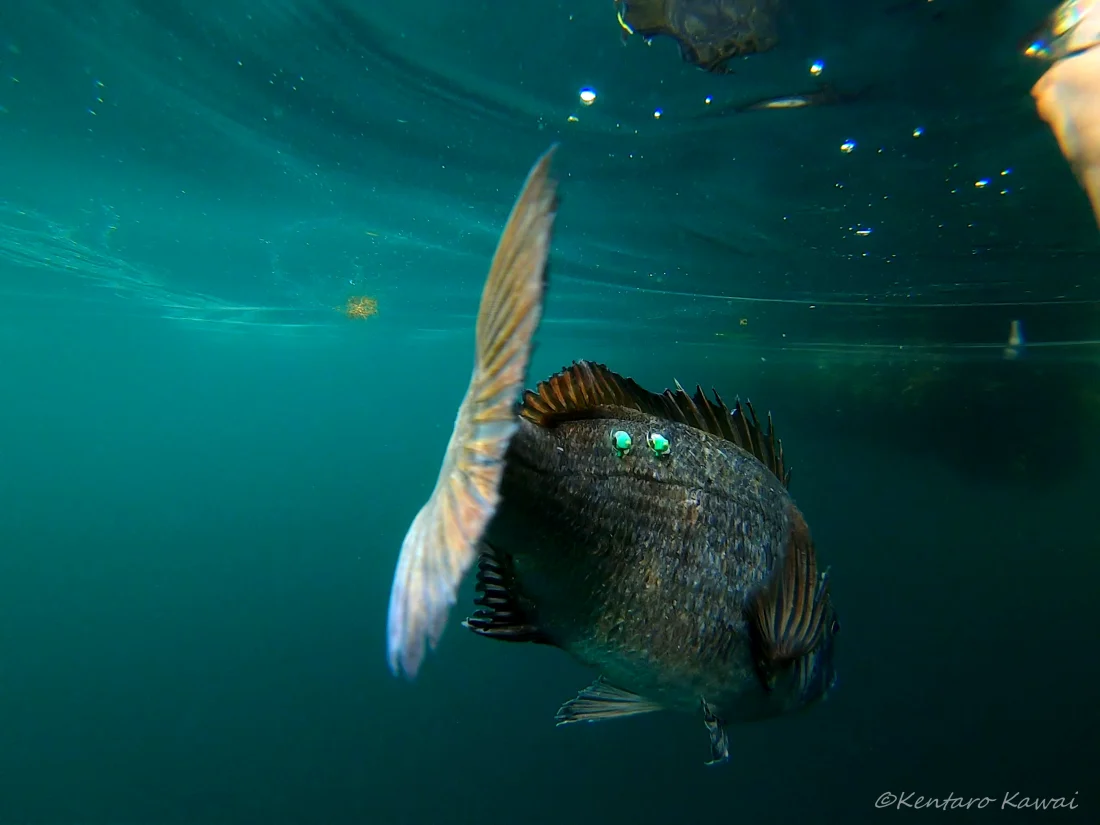
TOKYO — Male and female black sea bream show distinct movement patterns during spawning in Hiroshima Bay, Japan, researchers at Hiroshima University said in a study published in Hydrobiologia.
Using ultrasonic biotelemetry, the team tracked eight males and five females over three spawning seasons in oyster farming areas. Males moved across broader areas and made frequent vertical movements around evening spawning periods, while females stayed near specific oyster rafts with more restricted movements.
“The most important message is that males and females can show distinct reproductive movement patterns even in broadcast-spawning fish,” said Kentaro Kawai, assistant professor at Hiroshima University and lead author. “In black sea bream, males appeared to patrol more broadly and actively, whereas females tended to stay near particular oyster rafts.”
The researchers suggest male patterns may reflect active mate-searching, while female behavior may conserve energy for egg production. Oyster farming areas, which provide food and shelter, may serve as overlapping feeding and spawning grounds for the species, also known as black porgy.