Chile— Astronomers have found the clearest evidence yet that the supermassive black hole at the center of the Milky Way is expelling a cosmic wind, ending a decades-long search.
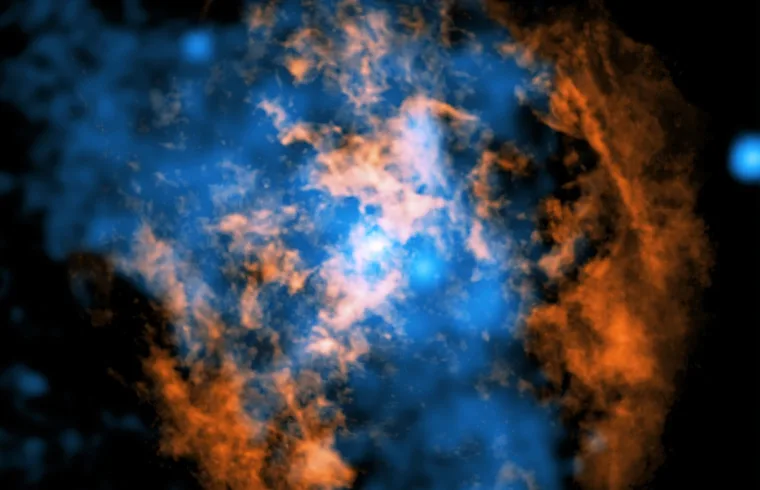
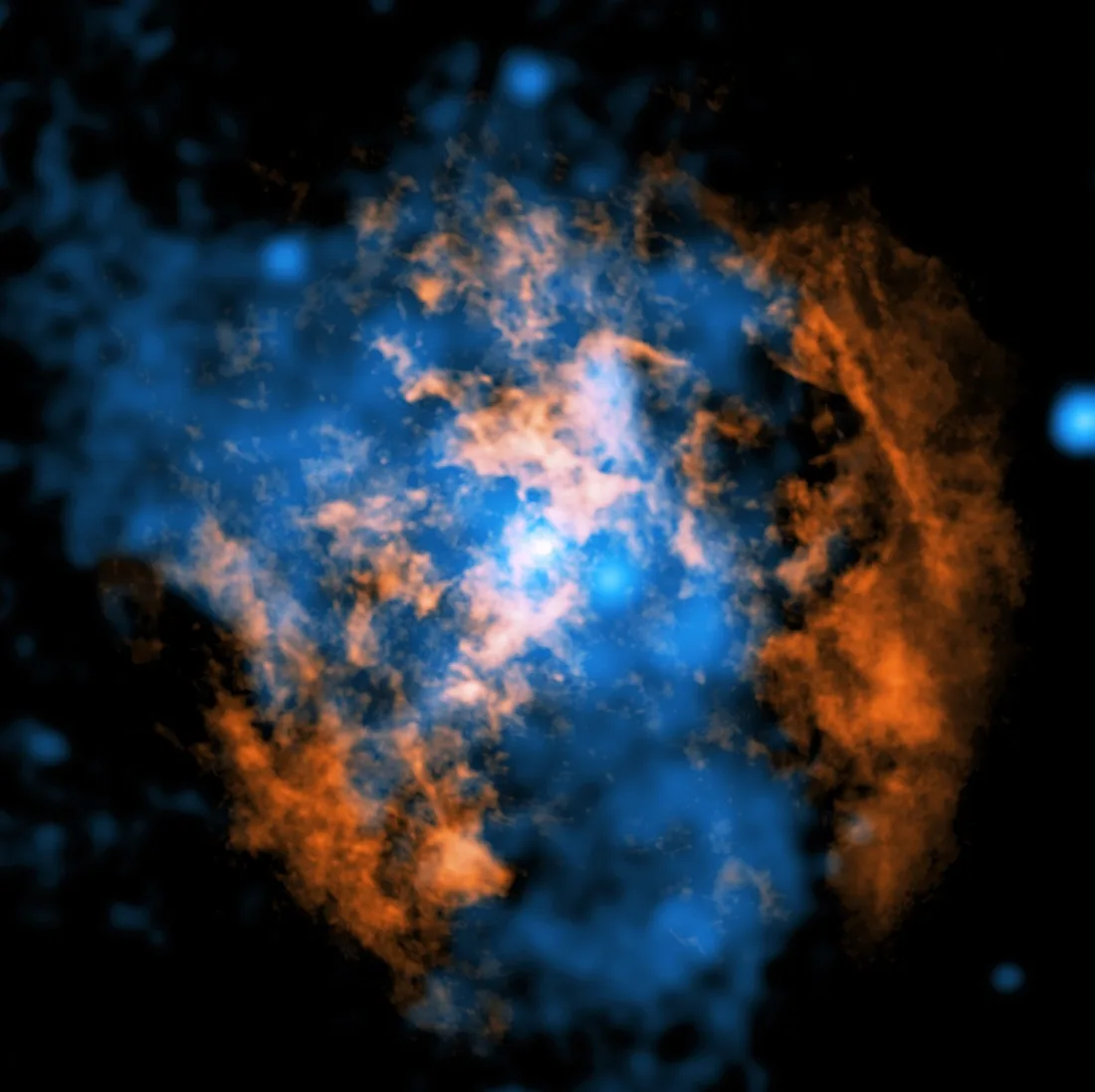
Using the Atacama Large Millimeter/submillimeter Array (ALMA) in Chile, researchers mapped cold gas within three light-years of Sagittarius A* (Sgr A*). After subtracting the black hole’s bright radio emission, they identified a cone-shaped cavity in the gas pointing directly toward the black hole — a signature of material being pushed outward.
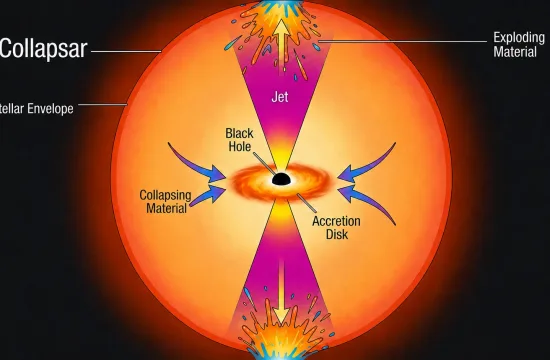
The findings confirm predictions that black holes not only consume matter but also drive winds or jets. Data from NASA’s Chandra X-ray Observatory showed hot gas filling the same region, ruling out nearby stars as the source.
The ALMA map, based on more than five years of observations at 1.3 millimeters, is about 100 times more sensitive and 80 times sharper than previous surveys. It revealed faint structures traced by carbon monoxide molecules, providing the most detailed view yet of the black hole’s immediate environment.
Researchers estimate the wind has been active for at least 20,000 years. While relatively mild compared to the powerful jets seen in other galaxies, the outflow is reshaping the gas around the Milky Way’s core.
The discovery resolves a long-standing mystery and offers new insight into how supermassive black holes interact with their surroundings.