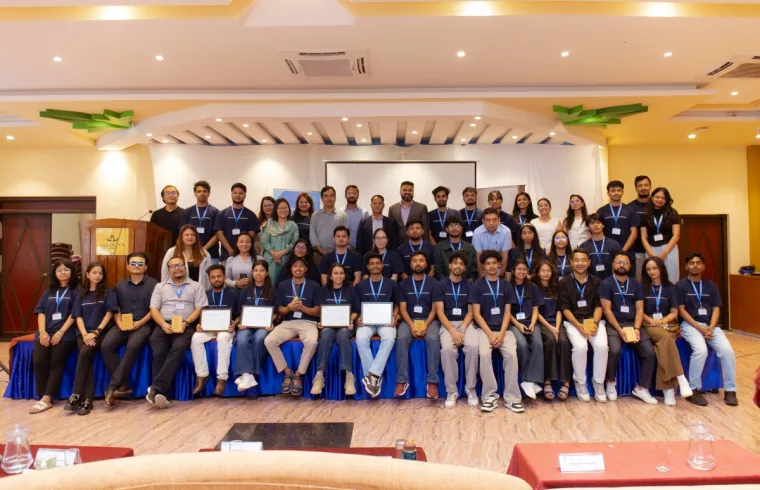
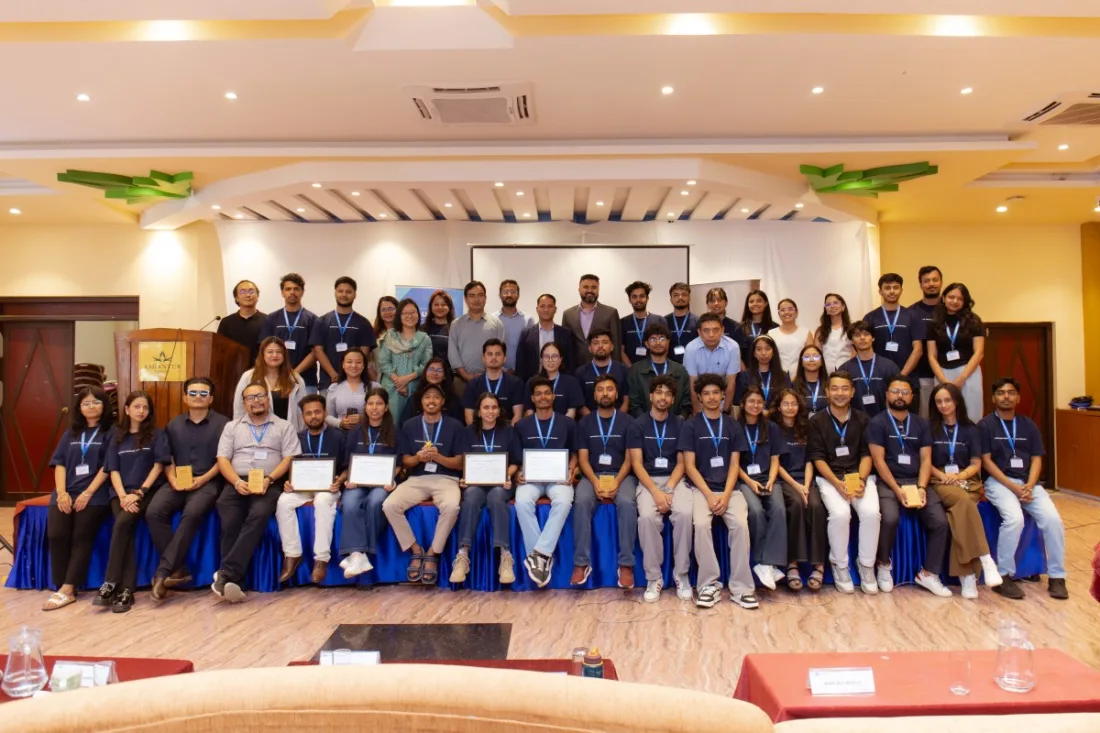
Dhulikhel, Nepal – Nepal has launched its first youth-designed school carbon footprint calculator, developed during a three-day hackathon organized by Shequal Foundation in partnership with UNESCO. The initiative, part of a broader project to strengthen climate-smart education systems, concluded on June 26 in Dhulikhel.
The hackathon, titled Hacking for a Carbon-Neutral Future, brought together 28 youth teams from across Nepal’s seven provinces. Participants co-designed a bilingual (Nepali/English), offline-capable tool enabling schools to measure and track carbon emissions. The project is jointly implemented by UNESCO and UNICEF with funding from the Royal Norwegian Embassy.
Following a nationwide outreach campaign, 15 teams were selected for a 10-day mentorship program before competing in a virtual pitch round on June 10. Seven finalists advanced to the in-person hackathon, where they developed minimum viable products under expert guidance.
Team Harit, comprising four students from Kathmandu University, won the competition with a calculator built around school data such as bills, fuel records and waste estimates. The tool, designed to be simple and visual, will be piloted in selected schools before being handed over to UNESCO for wider adoption.
Key features of the calculator include a bilingual interface, offline-first functionality, Nepal-specific emission factors, and alignment with the Green School Quality Standards (2024) and draft Green School Implementation Standards.
Officials said the initiative highlights the role of youth in tackling climate challenges. “The creativity and technical ability demonstrated by youth show they are not only learners, but innovators capable of developing practical, locally relevant solutions,” said Prakriti Gurung, UNESCO Kathmandu programme officer.
The winning team will undergo a four-week incubation sprint with Shequal Foundation to refine the tool before pilot testing in three schools. The project aims to embed green policies and tools into Nepal’s national education system, addressing the country’s vulnerability to climate-related disruptions.