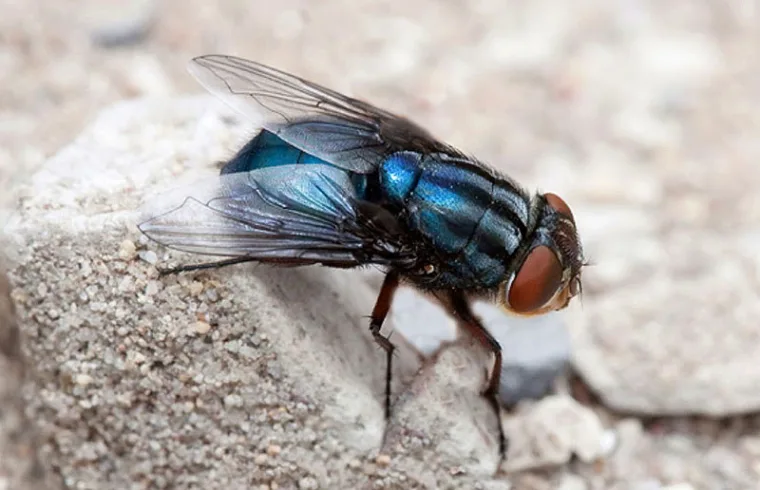
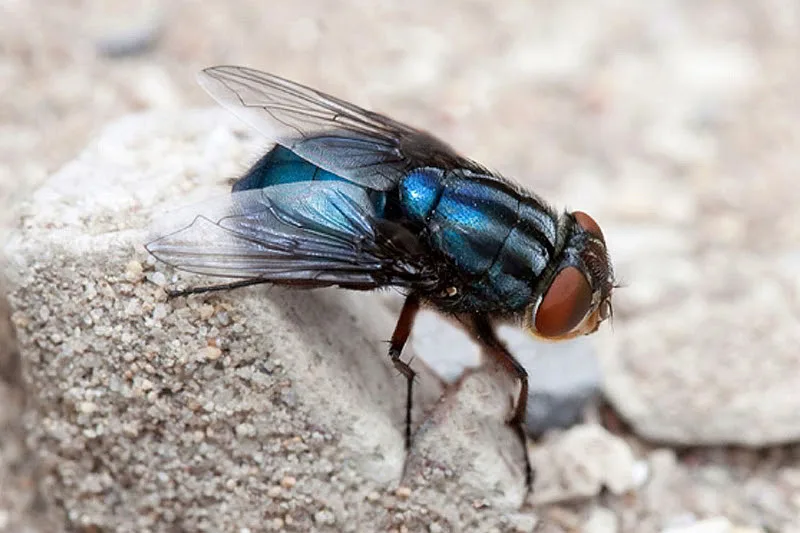
The International Atomic Energy Agency (IAEA) and Food and Agriculture Organization of the United Nations (FAO), through their Joint FAO/IAEA Centre of Nuclear Techniques in Food and Agriculture, are stepping up efforts to tackle the re-emergence of New World screwworm in Central America, Mexico and the United States through the application of a nuclear technique, as detections increase and emergency response efforts seek to contain the livestock pest.
The New World screwworm (NWS) is a parasitic fly whose larvae infest warm-blooded animals. Female flies lay eggs in open wounds or mucous membranes of warm-blooded animals; once hatched, the larvae burrow into living tissue, enlarging wounds and causing infections that can be fatal if untreated. The IAEA Coordinated Research Project (CRP) launched this week will help countries use the sterile insect technique capacity to halt the NWS’s re-invasion.
The sterile insect technique (SIT) uses radiation to sterilize insects, which are then released to mate with wild populations and produce no offspring, helping suppress pest populations over time. The SIT was central to the eradication of NWS from the US, Mexico, and Central America, when a 45-year campaign eradicated the pest from the US in 1982, down to Panama in 2006, with a sterile insect barrier remaining in the Darién Gap in Southern Panama. The barrier was effective until 2022, containing the spread of the fly towards the eradicated area.
The parasite’s recent resurgence poses a serious threat to livestock, animal welfare, wildlife and public health, with potentially severe socioeconomic consequences. On 3 June, the US confirmed its first animal case of NWS in more than 40 years, following the pest’s progressive re-emergence in Central America and Mexico after it was first reported in Panama, north of the barrier in 2022.
Infestations can kill animals and reduce milk and meat production. The previous eradication was estimated to have generated annual benefits of US $1.3 billion for livestock producers in the US, Mexico and Central America.
“The return of New World screwworm is already causing serious damage in the region, threatening animals, livelihoods and economies,” said IAEA Director General Rafael Mariano Grossi. “Through nuclear science and technology, and by coordinating with a new generation of researchers, the IAEA is helping countries strengthen the tools they need to detect, suppress and ultimately control this devastating pest.”
The new CRP will bring together leading experts from more than 20 affected countries – including those in South America – to strengthen surveillance and control methods, improve mass-rearing and sterilization, study mating compatibility and competitiveness, and support the release of sterile flies. Changing weather patterns, globalization and unlawful transboundary animal movements have contributed to the pest’s spread, creating new challenges for countries working to contain it.
“The New World screwworm outbreak in Central America, Mexico, and the United States is a timely warning that pests and diseases never respect territories, and addressing this re-emerged threat requires vigilance, international cooperation, and sustained coherent management in monitoring, science, and innovation. Through the Joint FAO/IAEA Centre and under the new Coordinated Research Project, we are strengthening proven tools such as the sterile insect technique, which has successfully eradicated this pest in the past, including in Libya, to help countries protect livelihoods and build more resilient agrifood systems,” noted FAO Director-General QU Dongyu.
Responding to the current outbreak could require up to 600 million sterile flies per week, but emergency response efforts are facing a shortage of sterile flies. The US-Panama commission (COPEG) facility in Panama – the only operational facility mass-rearing and sterilizing NWS – now produces about 100 million per week, while expanded capacity in Metapa de Dominguez, Mexico, and Mission, Texas, could add up to 400 million per week in the coming years.
The five-year project, with a planned budget of US $1 million, will include improving tools and methods for mass-rearing, sterilization, quality control and release.
“To meet the needs of greater numbers of sterile flies, the project will bring together expertise to improve the cost-effectiveness of mass-rearing, developing and managing screwworm strains, enhancing handling and release methods and studying mating behaviour and competitiveness,” said Rui Cardoso Pereira, head of the Insect Pest Control Section.
With sterile fly production currently insufficient to halt the spread, the project will help Member States strengthen surveillance and suppression measures required to monitor and control the NWS. These efforts include targeted insecticide application, livestock treatment and enhanced monitoring, complementing SIT as countries work to meet the needs of affected areas.
The transboundary threat of the New World screwworm requires a collaborative approach. SIT has been a major subject of the Joint FAO/IAEA Centre of Nuclear Techniques in Food and Agriculture for over 60 years. It involves both applied research to improve the technique and develop it for new pest insects, and the transfer of the SIT package to the Member States.
In a related development, this week’s agreement on the CRP comes just one week after the US announced to the IAEA Board of Governors that it was providing a US $1.5 million extrabudgetary contribution to support the IAEA’S efforts to combat the NWS using SIT.