
TAIPEI – Oil spills and fires pose distinct threats but share one trait: both can inflict severe damage before people have time to respond. Seeking faster detection, researchers in Taiwan have developed a fiber-based sensing system that identifies oil contamination and fire hazards in real time, according to a study published in Nano Energy.
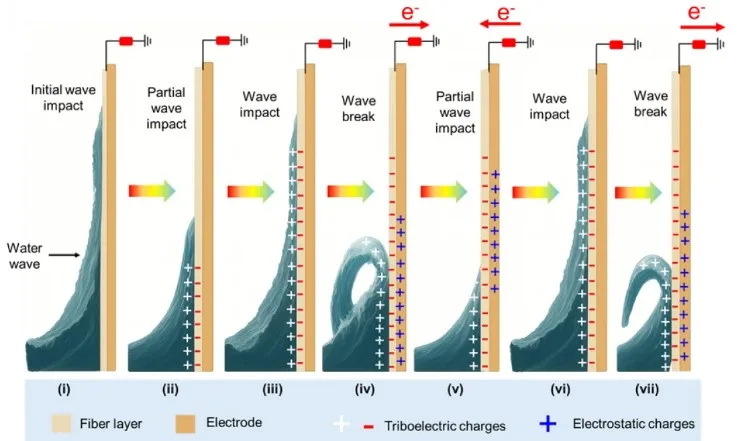
The platform is self-powered, converting physical contact into electricity without the need for batteries or external wiring. Its fibers repel water but attract oil, producing stronger electrical signals in clean seawater and weaker, prolonged responses in oil. The system was able to distinguish between different types of oil based on their electrical patterns.
The same material also reacts to heat. As temperatures rise, the fibers shift from blue to red and generate stronger electrical outputs, enabling early warning before flames become visible. The device demonstrated a response time of about 630 milliseconds.
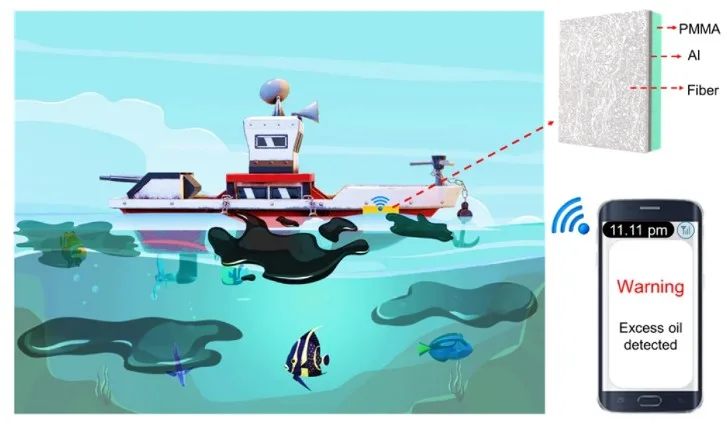
In tests, researchers mounted the sensor on a model boat. Signals remained stable in clean water but changed immediately when oil was introduced, triggering a wireless alert.
The study suggests the lightweight, maintenance-free system could be adapted for maritime monitoring, industrial safety, smart cities, autonomous systems, and wearable protection.
“This work shows how a single self-powered fiber platform can provide early warning for both oil contamination and fire hazards, opening new possibilities for real-time environmental safety monitoring,” said co-corresponding author Zong-Hong Lin, professor of biomedical engineering at National Taiwan University.