TAIPEI, April 21 – Researchers in Taiwan have developed a new method to track how recycled polyester moves through the economy, highlighting untapped opportunities for high-value industries to drive demand for sustainable materials.
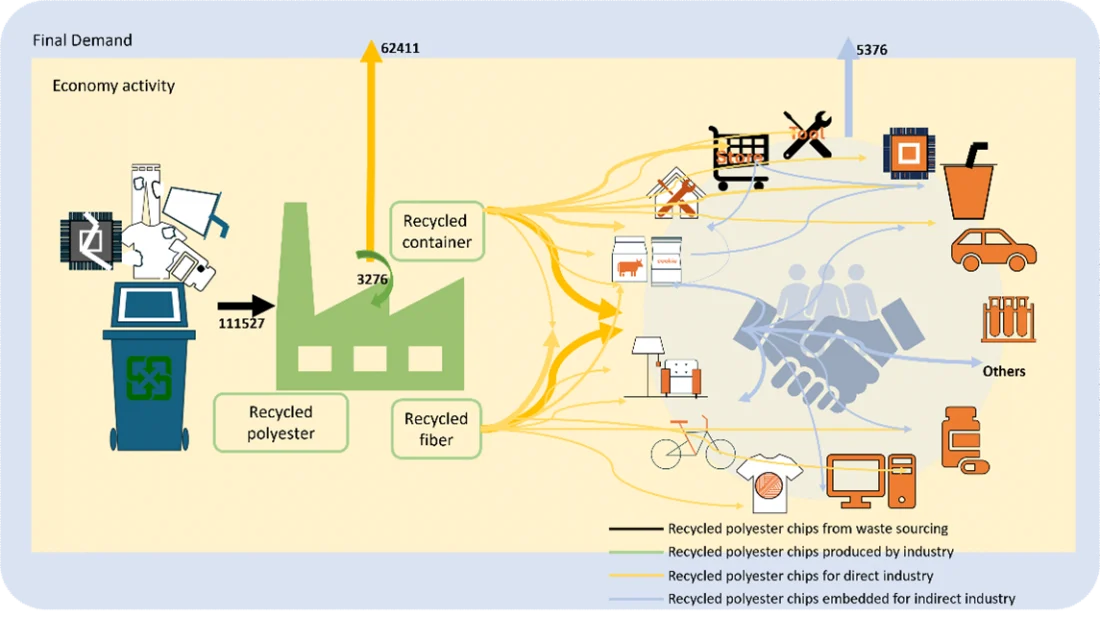
The study, published in Resources, Conservation and Recycling, links inter-industry financial transactions with physical flows of recycled plastics using an IO-MFA model. By analyzing Taiwan’s industrial data from 2013 to 2022, the researchers found that most recycled polyester currently ends up in low-margin sectors such as basic yarn and fabric production.
However, the research uncovered that high-value industries – which do not buy recycled plastics directly – often incorporate significant amounts of “embedded” recycled content in their products. These indirect connections are largely invisible in traditional reporting, leaving many companies unaware of their role in advancing the circular economy.
The authors argue that governments should introduce “market pull” policies, such as mandating minimum recycled content in consumer products. Such measures would create strong demand signals for recycled materials, encouraging high-end brands to source them from suppliers and driving technological upgrades across the supply chain.
“This research uncovers hidden material flows within complex economic systems, providing an evidence-based tool for industrial matchmaking to more effectively accelerate Taiwan’s transition toward a circular economy,” said Prof. Hwong-wen Ma of National Taiwan University’s Graduate Institute of Environmental Engineering.