TOKYO – Scientists in Japan have identified how female crickets transmit environmental signals that determine whether their offspring develop immediately or enter a dormant state known as diapause.
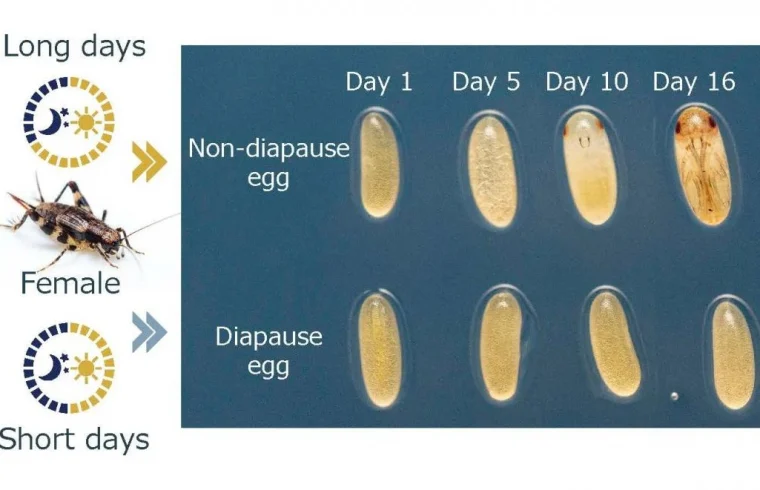
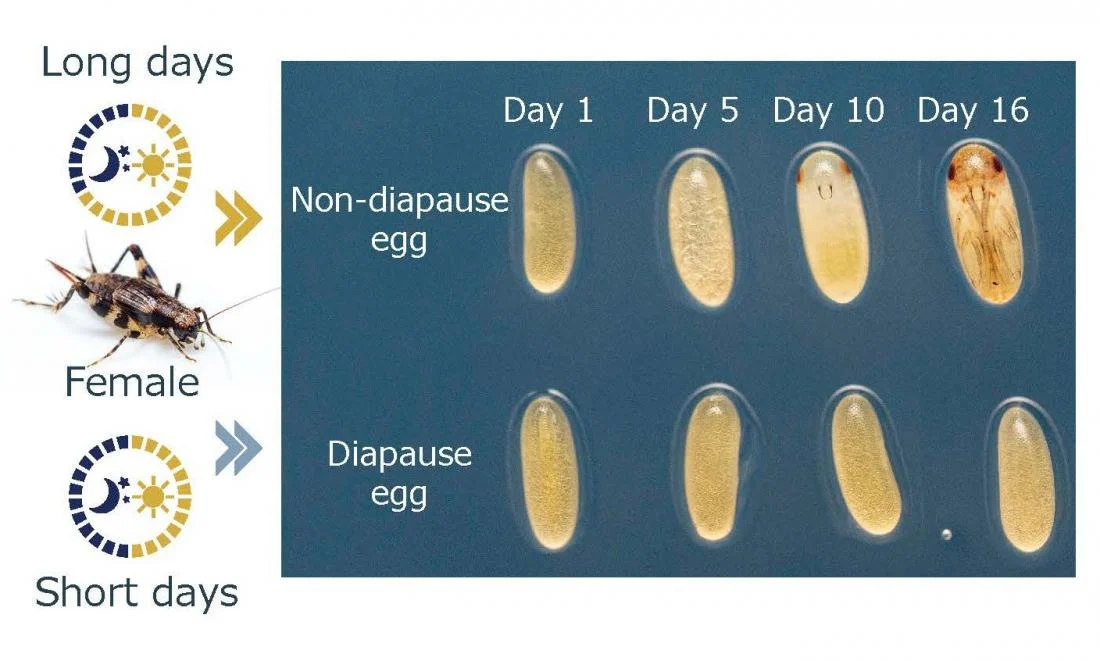
A team led by Professor Shin Goto and Dr. Yuta Shimizu at Osaka Metropolitan University studied the band-legged ground cricket Dianemobius nigrofasciatus, which produces fast-developing eggs in summer and diapause eggs in autumn.
The researchers found that diapause eggs undergo transcriptional, epigenetic, and metabolic reprogramming within 24 hours of being laid. Genes linked to chromatin remodeling were activated, while accessibility of genes involved in neural development and the cell cycle was reduced, suggesting early preparation for growth arrest.
“In diapause eggs, many genes involved in amino acid and carbohydrate metabolism were expressed,” Shimizu said. “This suggests that diapause eggs generate energy to sustain long-term survival.”
Diapause, a survival strategy used by many insects to withstand adverse conditions, is often triggered by maternal cues. While common across species, its molecular mechanisms have remained poorly understood.
Goto said the findings could have practical applications. “Understanding the genes and mechanisms that regulate diapause may lead to the development of novel insecticides and pest management strategies, such as delaying pest emergence until after crop harvest,” he explained.
Although the band-legged ground cricket is not considered an agricultural pest, researchers believe similar processes occur in species that damage crops.